2026.02.06|Town
Amid swirling snow, the ceremonial loincloth races of the traditional “Hundred-Times Strike” ritual praying for residents’ health
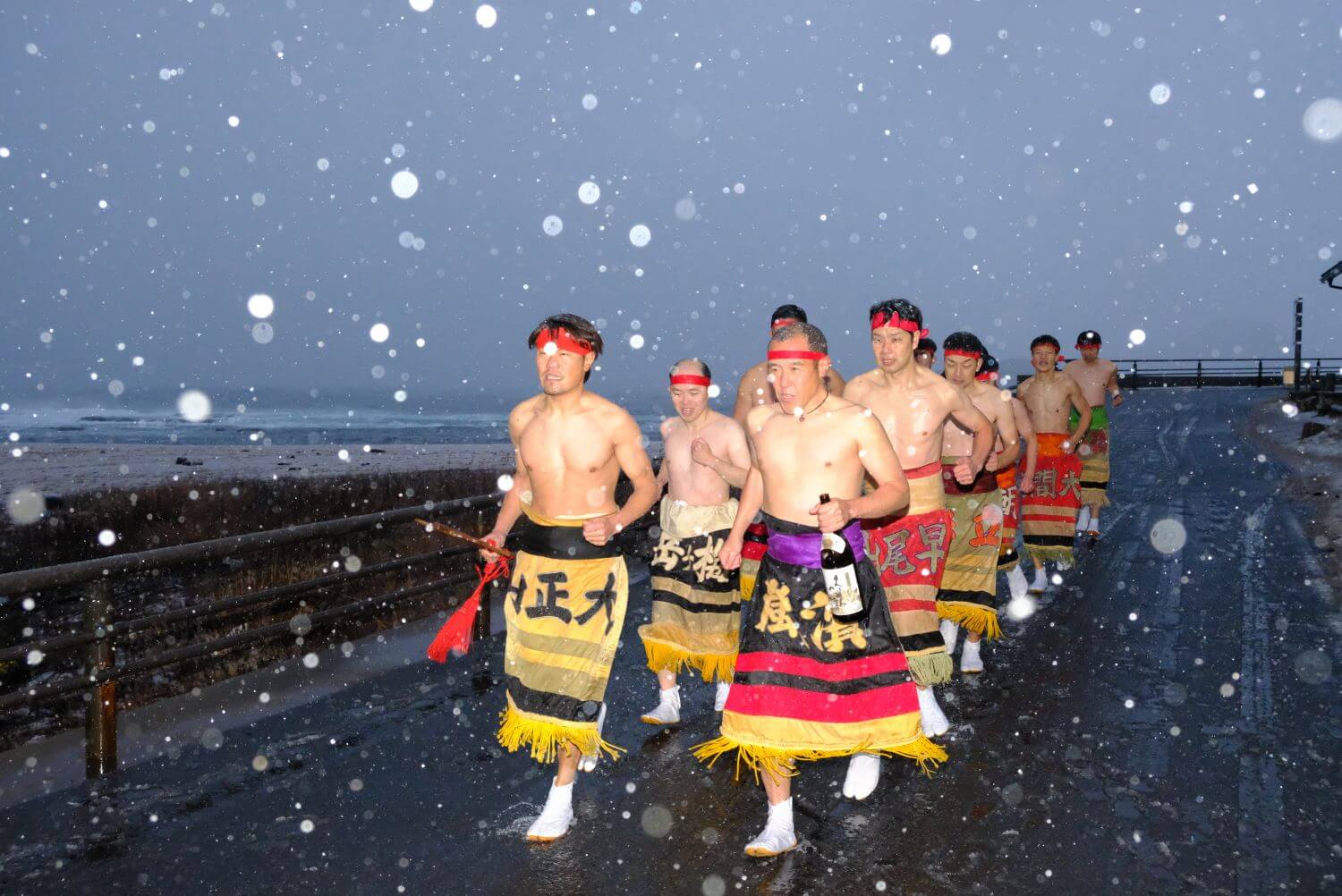
Men race along the Sea of Japan coast during the Hyakudo-uchi ritual in falling snow (Tango-cho, Kyotango City)
The traditional event “Hyakudo-uchi,” where bare-chested men wearing sumo mawashi loincloths visit shrines, took place on February 1st in Taiza, Tango-cho, Kyotango City. Heavy snow had continued in the Tango region since the previous week, and on this day too, the men ran through the winter fishing town amid light snowfall, their spirited shouts echoing.
The Hyakudo-uchi, believed to have begun in the Edo period, is held around Setsubun (the beginning of spring) and in autumn in the Oganari district of Taiza. It prays for the region’s peace, for abundant fishing, and protection from misfortune. The names on the ceremonial belts, such as “Tateiwa” and “Jōshimagasaki,” are inspired by local landmarks.
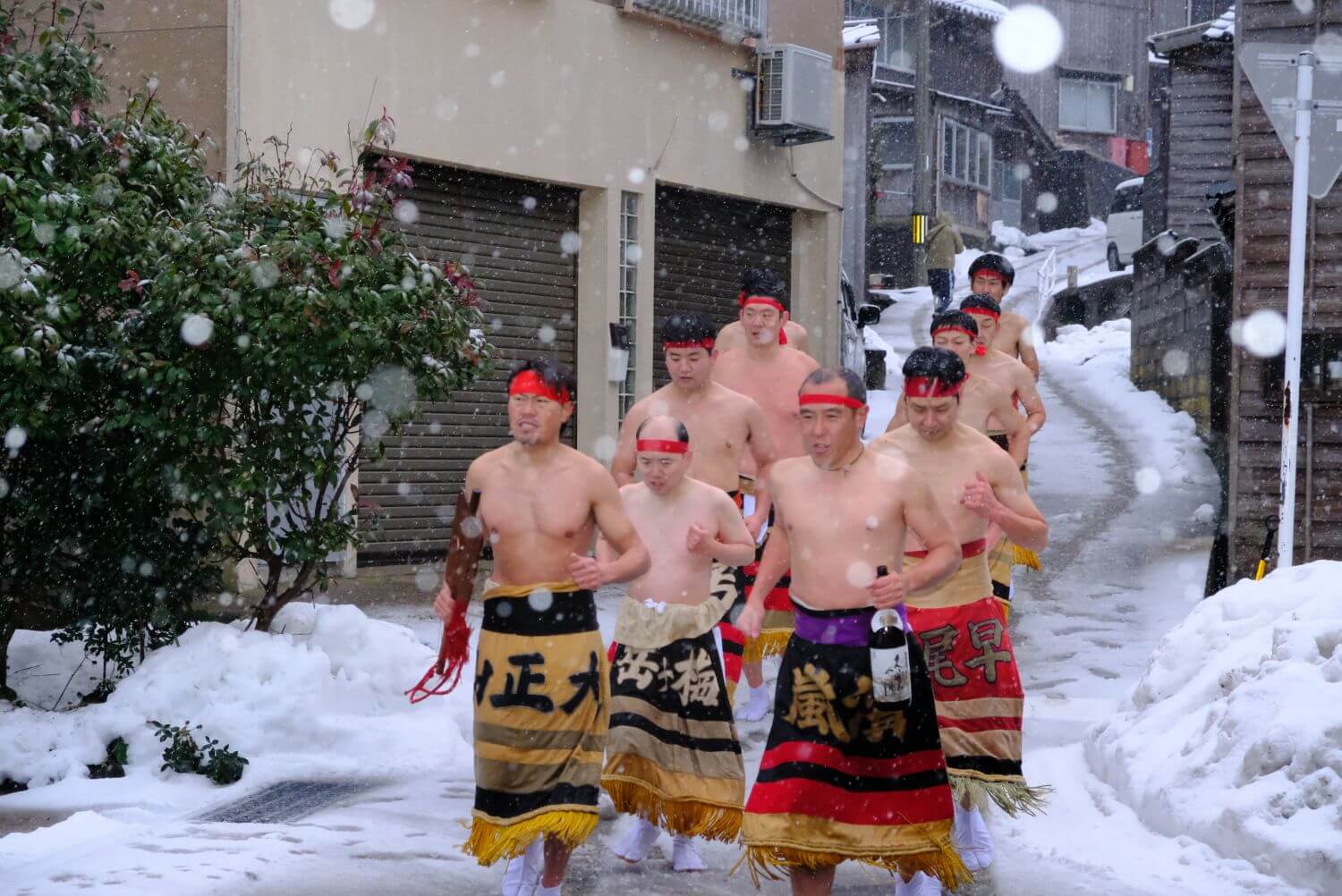
Running through the snow-covered village in the biting cold
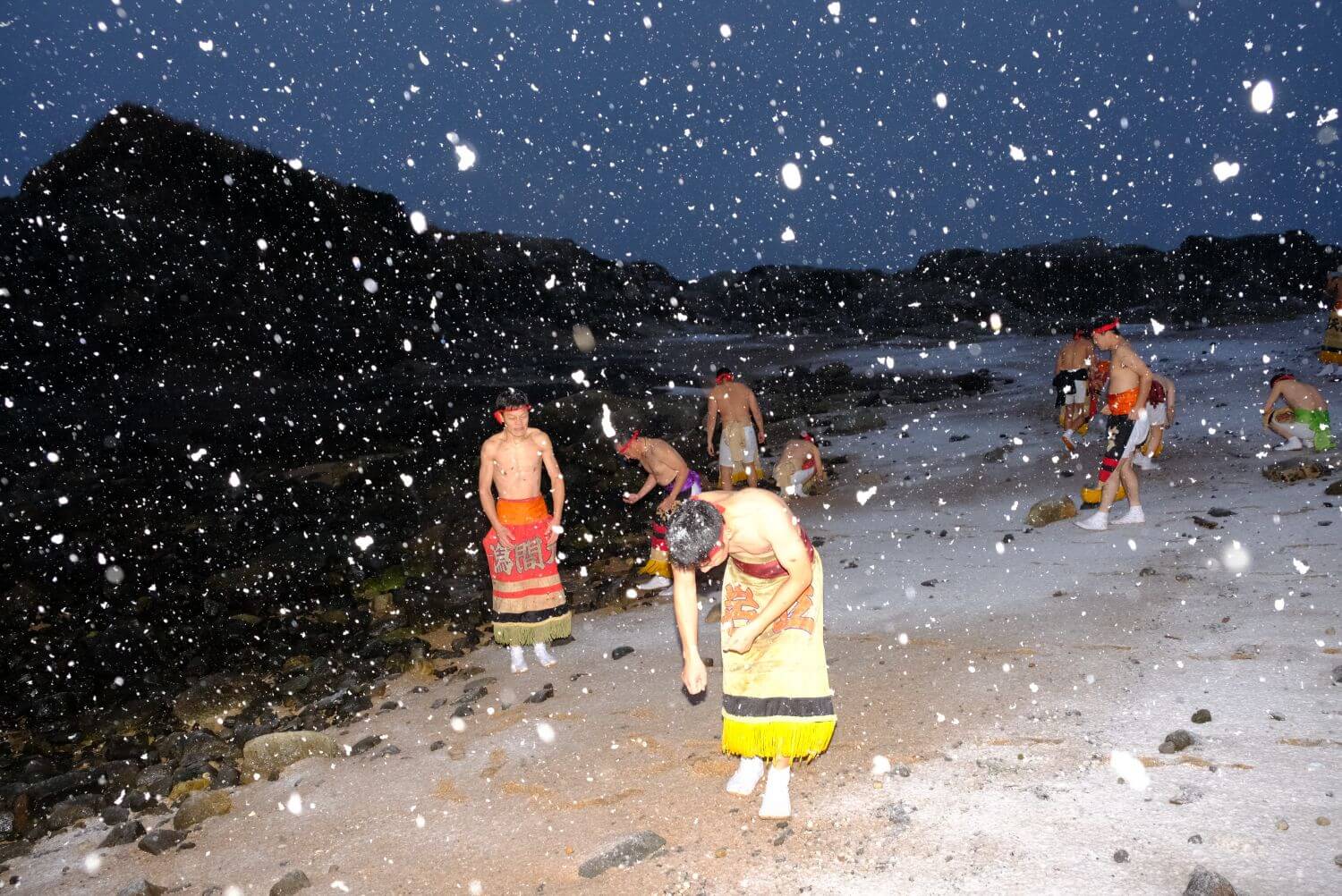
Picking up stones to offer at the shrine
At 7 a.m., eleven people in their 20s, 30s, and 40s from inside and outside the district departed the Okanari Community Center wearing ceremonial sashes and red headbands. Shouting “Wasshoi, Wasshoi!” they ran through the village and gathered small stones on the sandy beach where the cold wind from the Sea of Japan blew fiercely. The group, their bodies flushed, ran along snowy paths, visiting the three shrines—Mitsubashira, Inari, and Hayao—and offered two small stones at each.
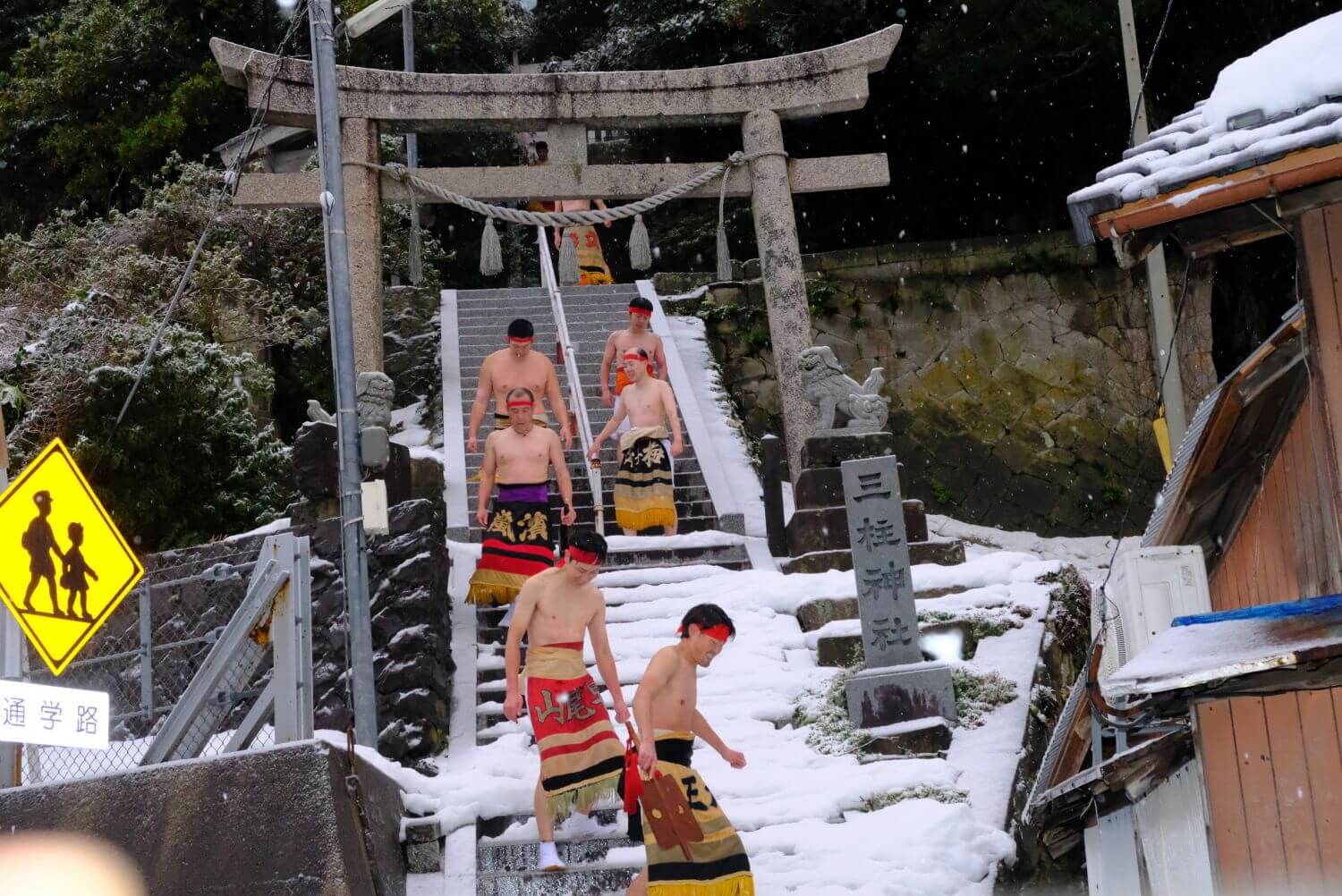
After paying respects at Mitsubashira Shrine, they descended the stone steps
After finishing the race, local office worker Takehiko Obata (49) said, “It was tough with the snow, but I ran wishing for the residents’ health. I want to preserve this traditional event.” First-time participant Kohei Yamaguchi (35), an office worker from Higashiosaka City, Osaka Prefecture, remarked, “It’s an incredible event you don’t find in the city. I felt the community bond and the greatness of the area.”
Copyright © The Kyoto Shinbun
Translated by Kyotango City Tourism Association