2026.09.29|Town
130 Years of Matanozoki
What do they see?
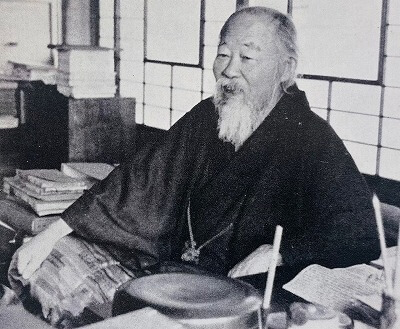
Rohan Koda, writer of a travel journal mentioning the Matanozoki (Modern Japanese Literature, Rohan Koda, published by Kodansha)
“The scenery, fleeting like an ink wash, flipped, and now was as a panoramic oil painting … ”
This line appears in a travel journal written by the Rohan Koda (1867 – 1947), a noted japanese author during the Meiji period. What surprised him that day was one of the Three Sceneries of Japan, Amanohashidate (Miyazu City)’s “Matanozoki”.
One person kneels down and looks out over the sandbank through their legs, you laugh and join in. The sea and the sky switch places, and the view seems more vibrant than before. “Above the bridge and the water flows the river of the sky” (Koda).
The change in perception awoken by the action of bending down and viewing the sandbank upside down has also been studied. About 10 years ago, researchers recieved an Ig Nobel prize for their research on how changing your orientation results in changes to your sense of perception. Your vision becomes less accurate, and things far away appear closer, brighter, and with higher contrast. It seems just as Koda said.
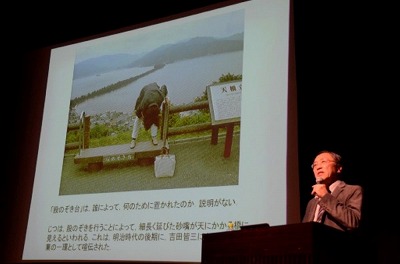
Atsuki Higashiyama, pictured during his acceptance speech for the Ig Nobel Price for research on perception during the Matanozoki (Tsuruga, Miyazu City, October 2016)
The Matanozoki is believed to have first appeared in writing about 130 years ago. Last week, one of our young writers looked into its history, and according to their investigation, the Matanozoki was likely first proposed in the mid-Meiji period by the owner of a local luxury hotel.
The custom has also spread in other regions of Japan. In folklore, it is said to allow one to glimpse the true forms of spirits or see what waits in their future. In Amanohashidate, it may also have been inspired by legends, and informed by a strange pose taken by visitors. It is amusing to imagine.
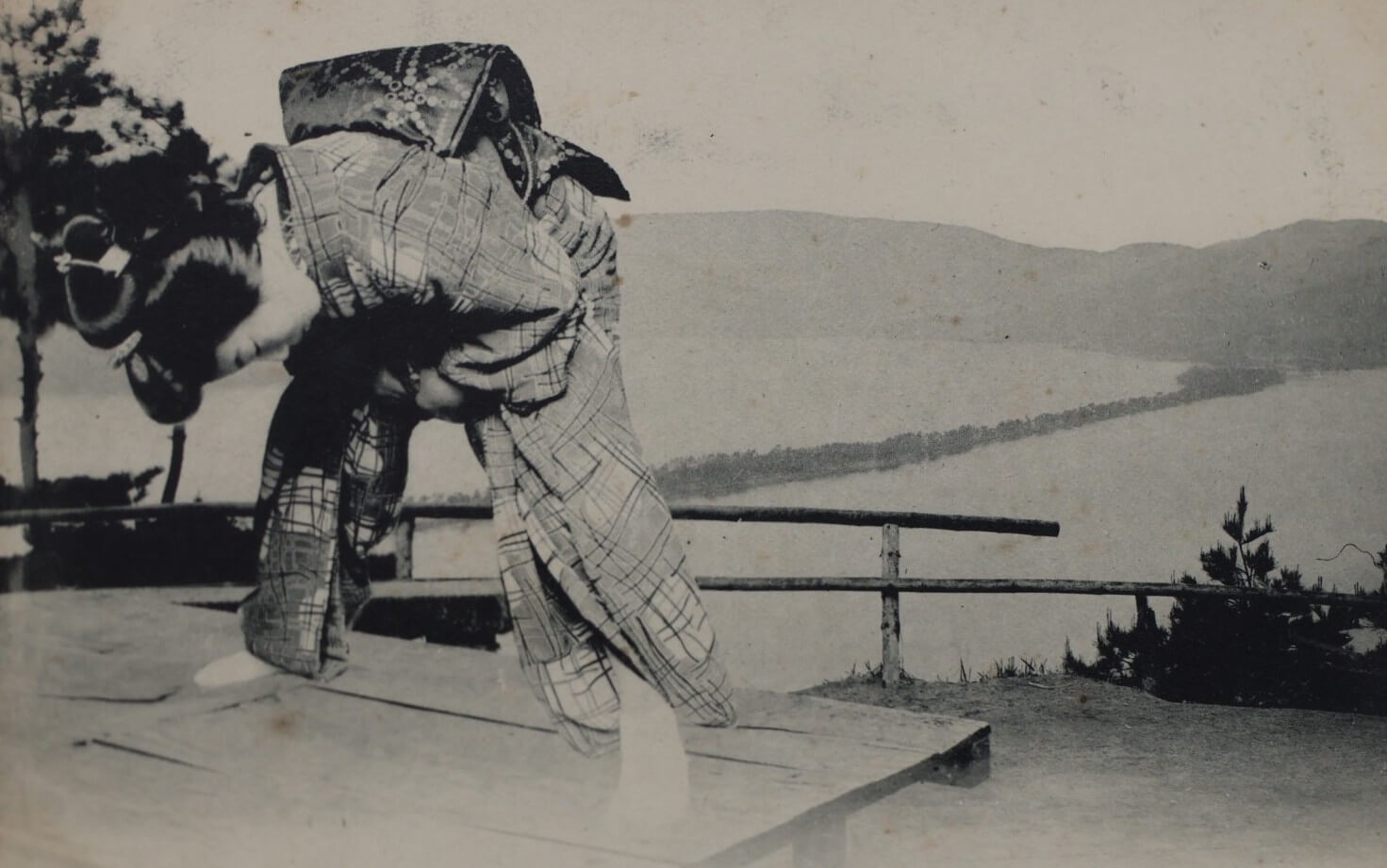
A pre-WW2 post card picturing a woman wearing a traditional kimono performing the Matanozoki (Kyotango City History Museum)
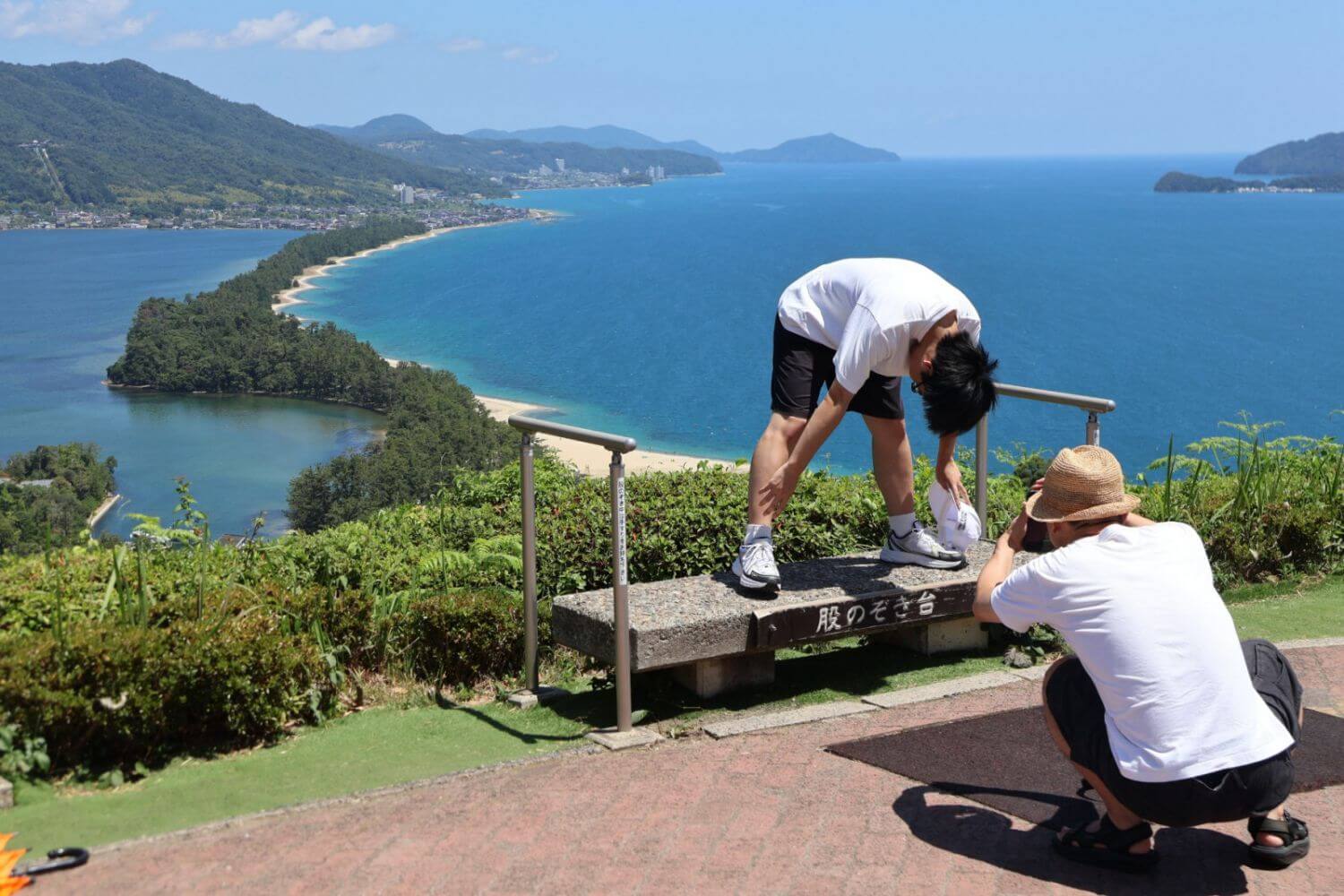
A group of tourists enjoying the Matanozoki at the popular Amanohashidate Viewland
Taking the classic pose, I looked out over the place of scenic beauty for the first time in a while. Up and down, forwards and backwards get mixed up, and I enjoy the bridge to the sky on the other side. Looking at things with a different perspective than usual can open up new worlds. Maybe the same applies to normal life?