2026.08.12|Town
War and the Home of Chirimen Silk
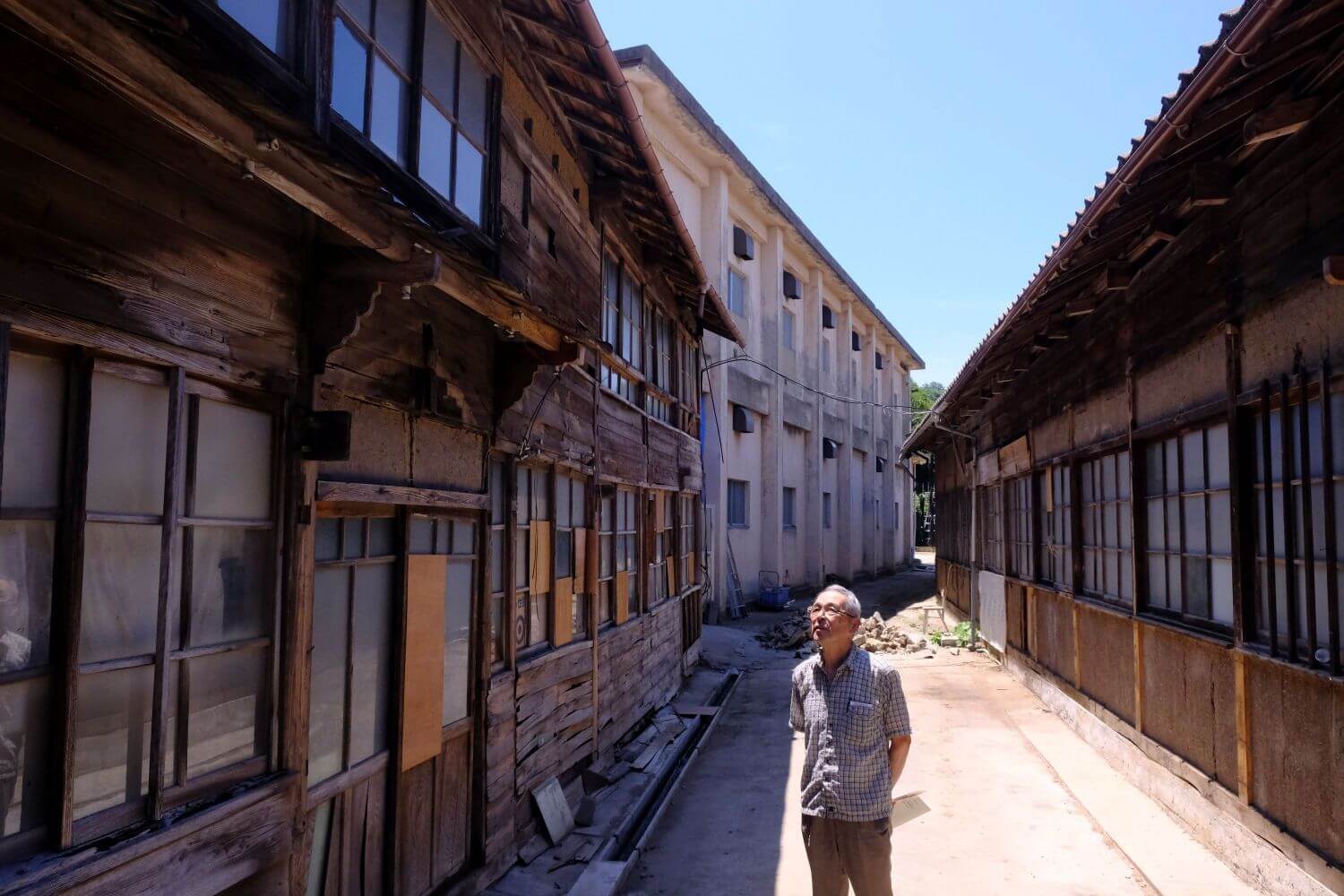
Eiichi, who's grandfather donated looms to the war effort. Left: a Meiji-era silk factory. Right: a former factory, which was demolished and rebuilt after the war. (Taiza, Tango-cho, Kyotango)
“I want our looms to become cannons and bullets; to be useful for the country.”
In 1943, during the Pacific War, Katsuro, Grandfather of Eiichi Nakae (79), donates all 45 looms from his fabric factory in Taiza, Kyotango. Eiichi’s mother’s diary speaks of a “send-off party” for the looms. There, Katsuro raised a glass to the machines, and with tears in his eyes, gave a speech and cheered…
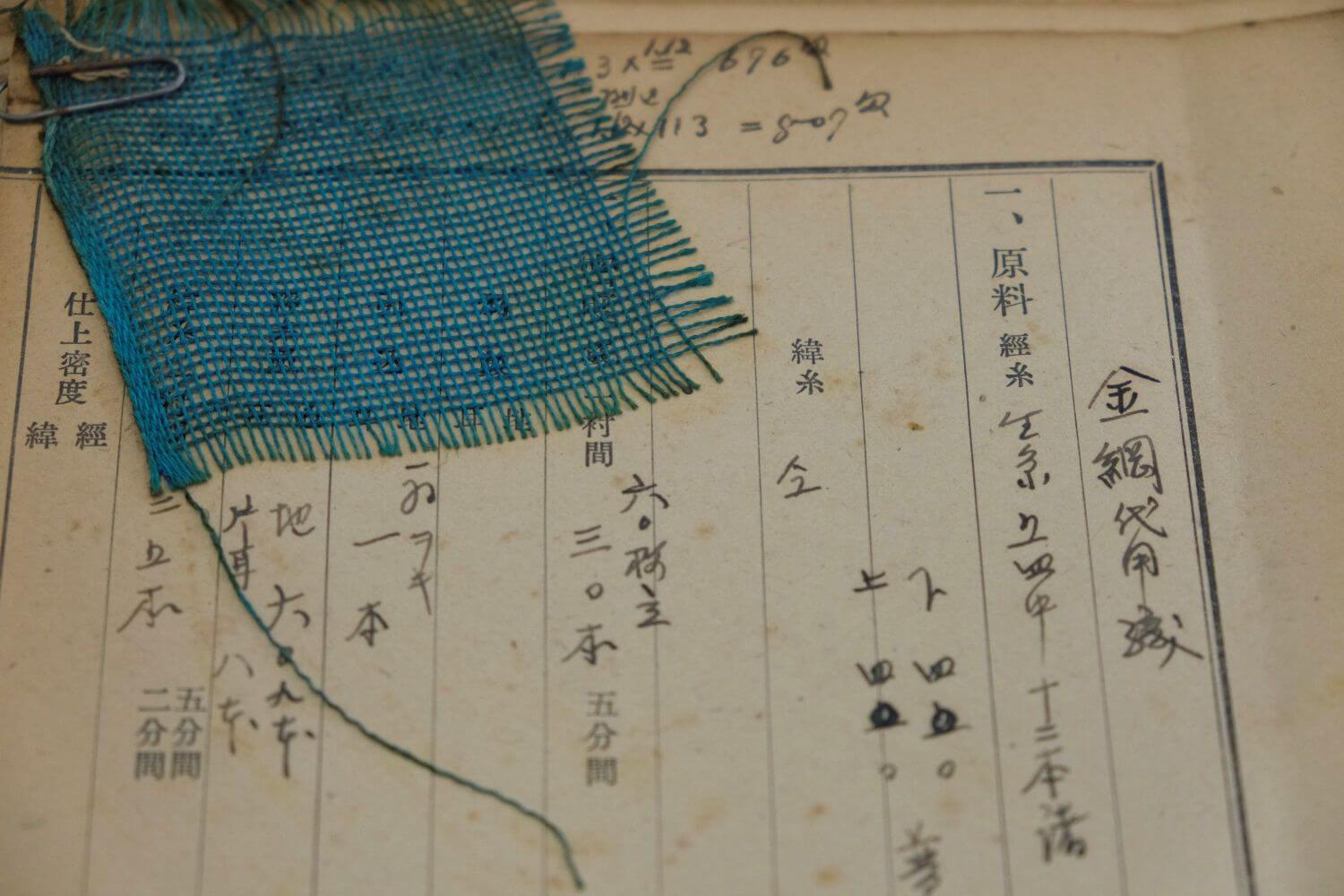
A woven substitute for Barbed Wire, made from raw silk found among materials labled "Pacific War Military Supplies".
“Father, who couldn’t send any soldiers for the war effort, sent metal instead. He was pulled along by the mood of the time,” says Eiichi.
Katsuro founded his factory in the Taisho era (1912 – 1926), soon before the 1927 North Tango Earthquake. Damage to the business from the earthquake was minimal, and the business quickly expanded. In the early Showa era (1926 – 1989), Chirimen silk production would enter its golden age, pushed forward by effective promotion efforts and the tumbling cost of raw silk.
According to the History of the Tango Textile Production Association, by 1934 the Tango region was home to 1,434 textile enterprises, among them 12,140 looms.
By 1937, the Second Sino-Japanese war would begin, and the National Mobilization Law was put in place. Military production was prioritized, and rationing became stricter. What would deal the largest blow to the textile industry was the 1940 Regulation on the Restriction on the Manufacture and Sale of Luxury Goods, commonly known as the Shichi-shichi Kinrei or “July 7th Prohibition”.
“Luxury products”, such as kimonos which used materials like gold or silver thread, were barred from sale. “Luxury is the Enemy” spread as a slogan. In 1943, the year Katsuro donated his looms, Japan’s position in the Pacific war was becoming unsteady. From across Tango about 10,000 looms were handed over to the military, factories were pivoted to military production, and many would close.
Becoming an Airfield
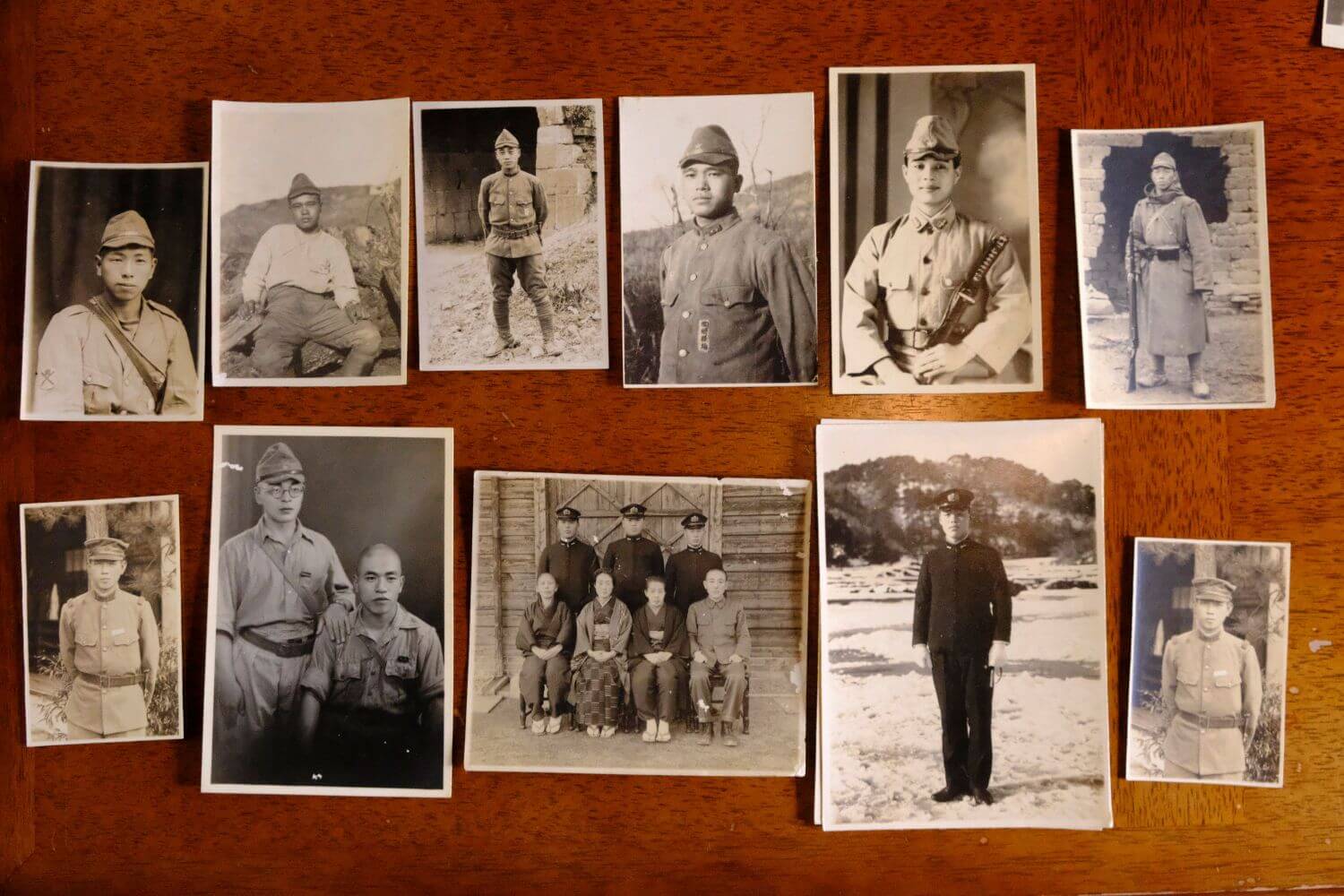
Passed down in Yoshimura Shoten, these photos show members of the Mineyama Naval Air Squad, as well as some who visited after the war. (Mineyama-Cho, Kyotango)
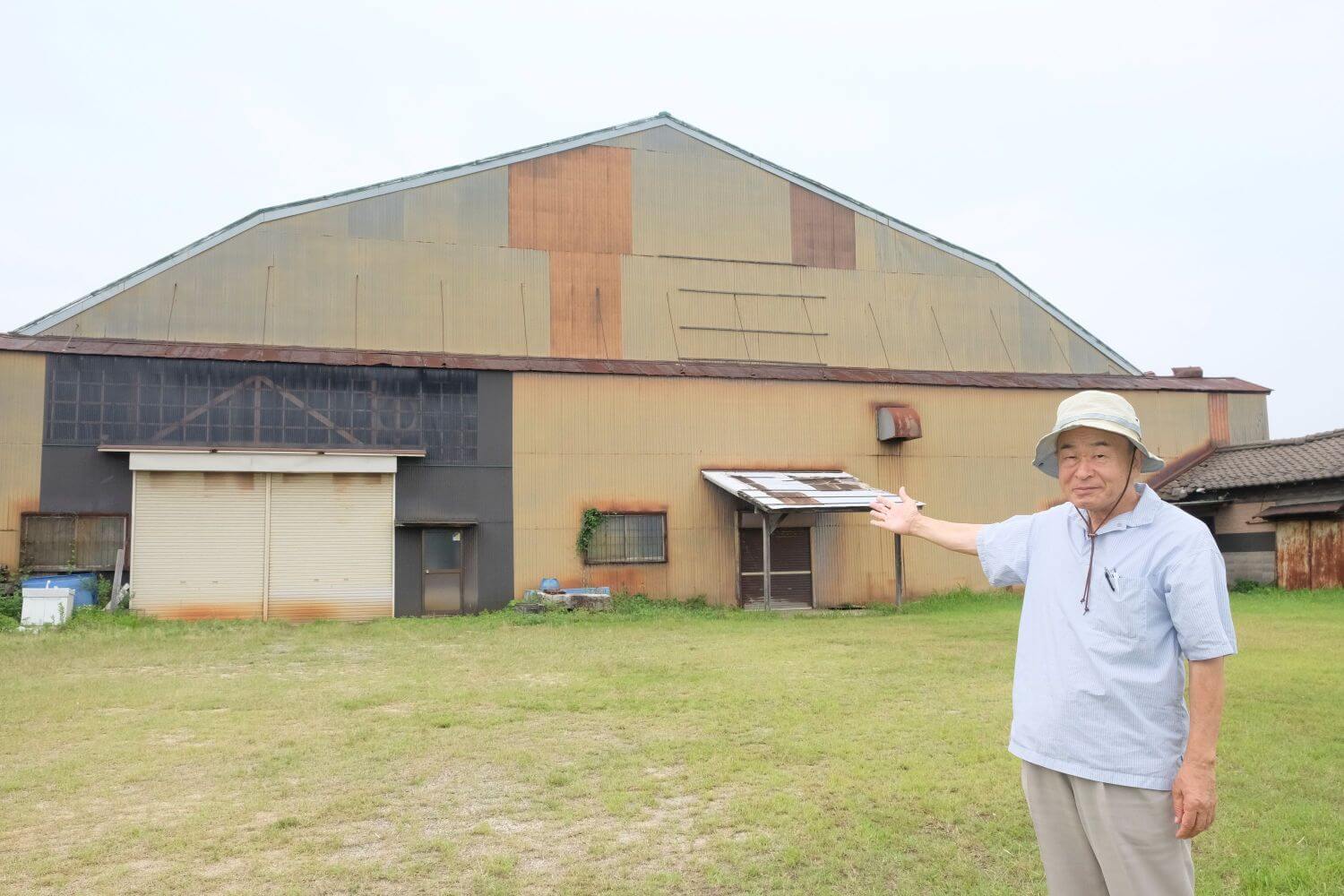
Yasutsugu Arita introducing a large wooden warehouse used by the Mineyama Naval Air Squad. (Shin-cho, Mineyama-cho, Kyotango)
Katsuro’s factory would also close, the building would be taken apart and used as a barracks for the Kobe Airfield.
This airfield was the base of the Mineyama Naval Air Squad, positioned on the border of Mineyama-cho and Omiya-cho. Beginning their operations in March of 1944, the group was tasked with conducting flight drills with a trainer aircraft nicknamed the “Akatonbo“.
“Beautiful rice paddies became a runway, and then an airfield. The aircraft was made with fabric, and some people died in accidents during training. Those who were left in the end were sent to Kamikaze bases such as Kanoya in Kagoshima prefecture, or Iwakuni in Yamaguchi Prefecture,” says Yasutsugu Arata (75), District Chief of the Kobe District in Omiya-cho. Even now, a large wooden warehouse and an explosives storage facility remain, which Yasutsugu has been working to preserve for future generations.
The warehouse is owned by Yoshimura Shoten, a seller of Tango Chirimen in Mineyama-cho. At their store, photos of the Air Squad members remain.
Roku (84) was the fourth daughter of Yoshimura Yataro, the head of the company during the war. During rest periods, squad members who were far from home would come to their house, and her parents would make them food. “My older sister told me that she used to weave the fabric for air force uniforms and the pale-colored parachute fabric [at the company’s factory],” says Roku.
Roku showed us some “Clefnet” fabric that was woven during the war. Made of durable khaki fabric, it was colored in a military style. The fabric was analyzed by the Kyoto Prefecture Textile, Machinery, and Metal Industry Promotion Center in Mineyama-cho, and they concluded it was made of silk using a twill weave characterized by diagonal lines.
Ichiro Isawa, Manager of the Technical Support Section, described it as “a western fabric, with a very high warp density and a fine weave.” During the war, the Center served as a Prefectural Textile Testing Center, and inside they have documents labled “Pacific War Military Supplies”. Among their test-woven fabrics, we found a Clefnet fabric woven for a raincoat. In addition to aerial life jackets, air defense nets, and woven substitutes for barbed wire, research was also conducted on habutae silk, which was used in parachutes. It can be seen that the Tango area served an important role in military production at the time.
We visited someone with memories of a military factory.
The father of Takao Yura (89), who lives in Yasaka-cho, in Wadano, worked at a local textile factory as an engineer. In 1945, he was sent to the front-line in Maizuru. An officer of the Mineyama Air Squad told Yura that “your father is going to do some very important work for the military. He should be back in a few days.” He was right, and Yura’s father would return to the factory 3 days later. Yura also spoke of a factory running some 240 looms coming under machine gun fire from an enemy aircraft, saying “the bullets ricocheted off of the machines and flew everywhere, it was a mess.”
In July 30th, 1945, “the Kawara Airfield was hit.” Yura saw a fighter jet making dive runs in the sky above Mineyama. Bombs exploded across the runway. Three died, and the elementary school was also damaged.
Loom donations, military production, air attacks… The war forced many sacrifices on the home of Tango Chirimen.
Copyright ©The Kyoto Shimbun
Translated by the Kyotango City Tourism Association