
Blog
Posted: August 19
Amino’s Asamogawa Minazuki Festival
As of writing, the 2026 Asamogawa Minazuki Festival passed just last month, and we wanted to take a moment to look at the history and meaning behind the processions of the portable shrine and folklore characters which set apart the festival.
For a reintroduction, the Minazuki Festival is one of a number of “kawasuso” or riverbank festivals held in Kyotango during the summer. Generally, the purpose of a kawasuso festival is to wash away the sins of the first half of the year down a river. Here, we call the kawasuso festival either “kawassosan“, or the Asamogawa Minazuki Festival. In Amino, it has been held in a similar form to now as long ago as the mid-Edo period (1603-1868), and possibly much earlier.
Today, it is the largest summer festival in the area, and a perfect opportunity to experience a lesser-known piece of local culture. The date of the festival has changed over the centuries, but today it is on the 30th of July every year – mark your calendar now!

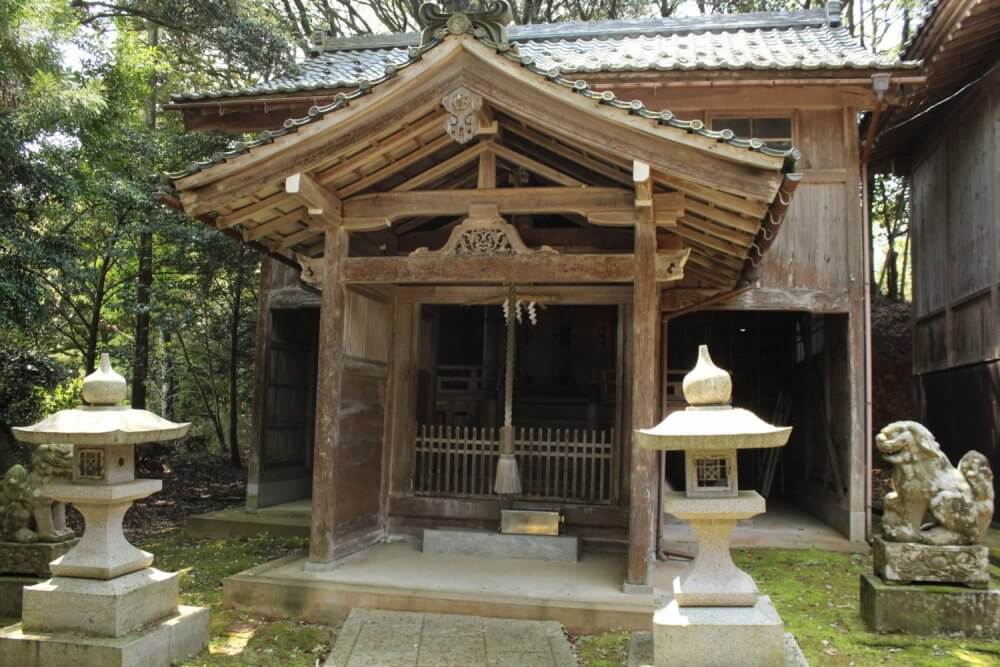
Minazuki Shrine
From the Shrine to the Beach
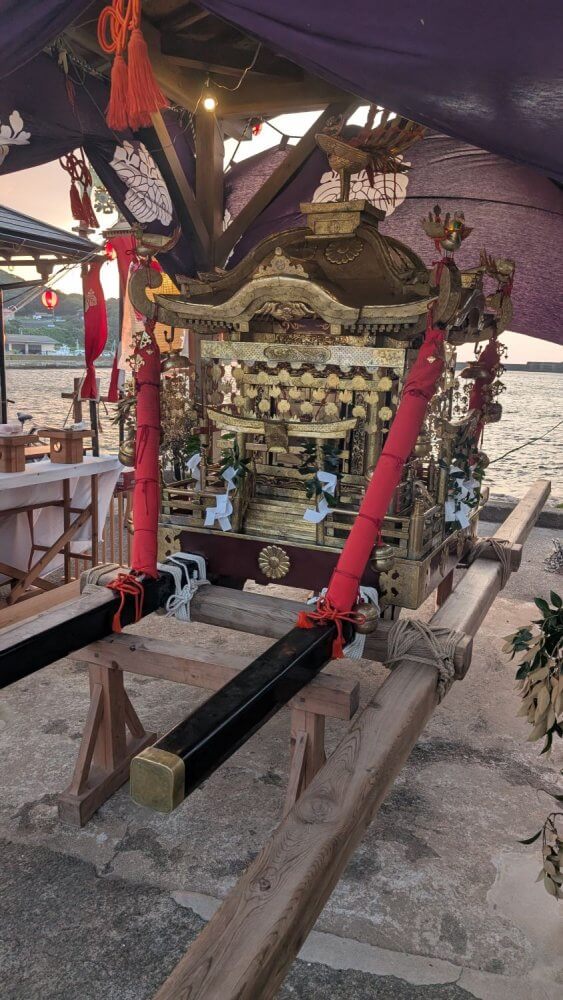
The festival begins when the omikoshi, or portable shrine (pictured below), is carried from the Minazuki Shrine to the nearby Hatchohama Beach. The Minazuki Shrine is within Hiyoshi Shrine, which we previously introduced in this article. Traditionally, the youth of Amino would carry the omikoshi around the town of Amino before descending towards the beach, but in recent years men in their 20s through 40s participate. In 2026, the procession left the shrine at 1:30 PM, made a few stops along the way, and arrived at the water two hours later.
Kawassosan Procession Leaving the Beach
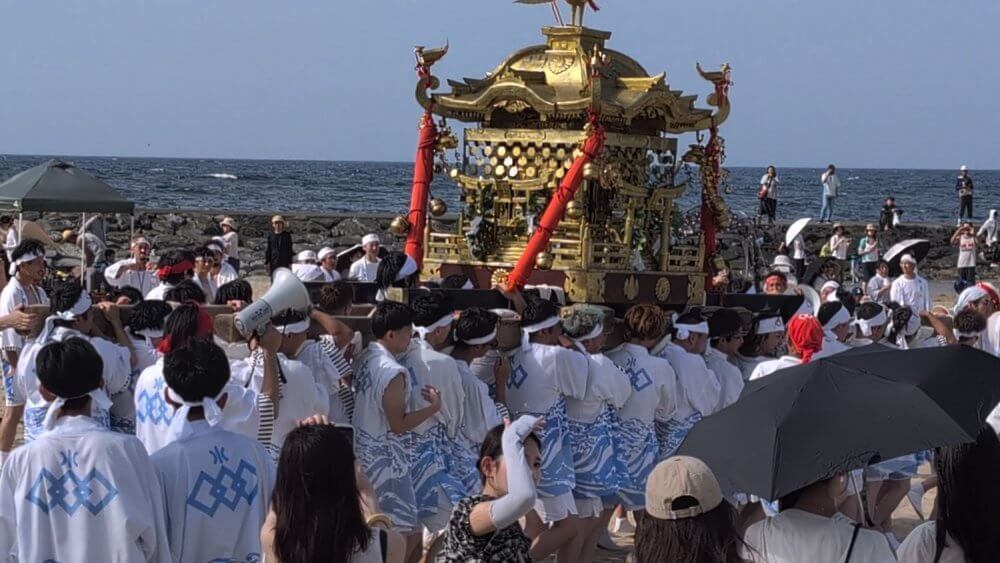
The Festival Processions
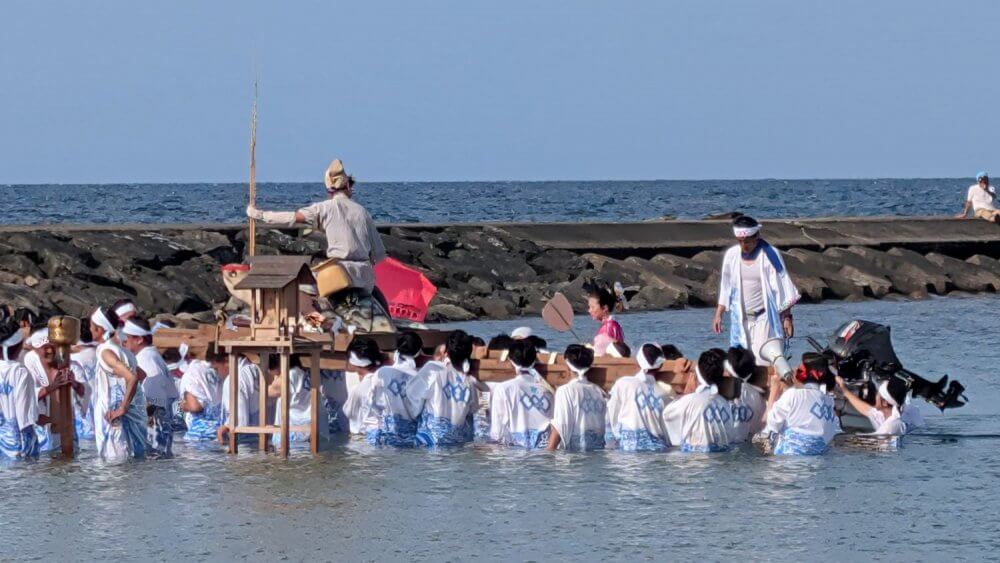
The main procession is when the omikoshi, and the sins of the last six months, are borne into the water to be washed away. For the festival, a small shrine referred to as the shrine of Hamamiya is set in the ocean, around which the omikoshi circles three times. Periodically, the bearers stop and lift the omikoshi up above the water, as if to show it slowly getting lighter as the sins are washed away. After three laps, the bearers raise the omikoshi above their heads, and the procession is complete.
The omikoshi and Shrine of Hamamiya The omikoshi as it loops around the Shrine
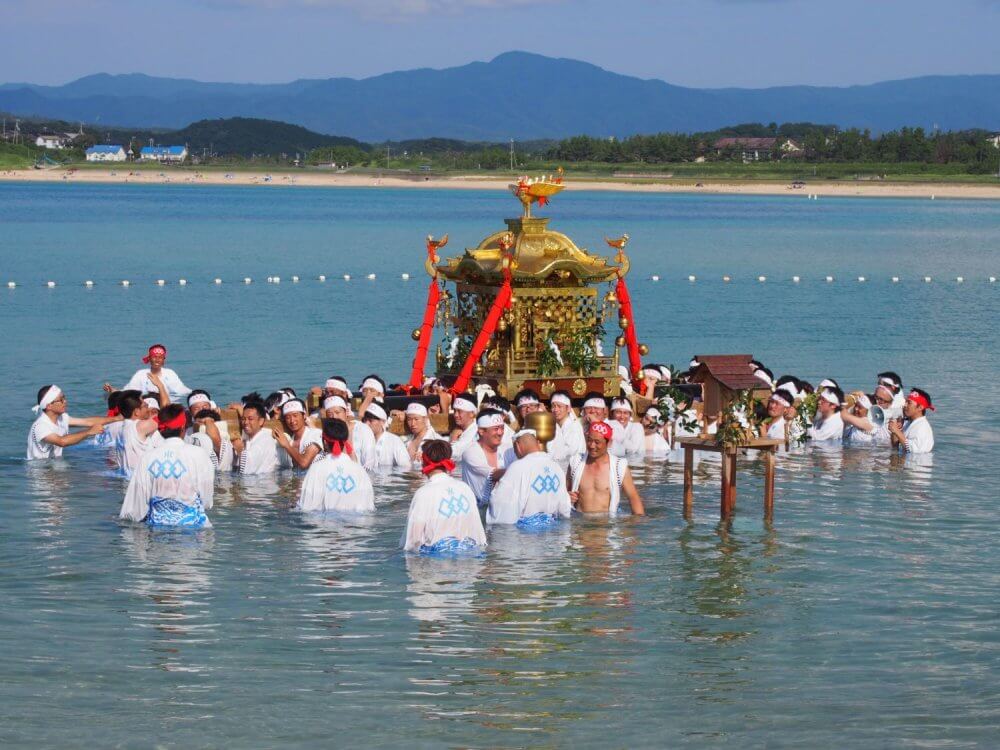
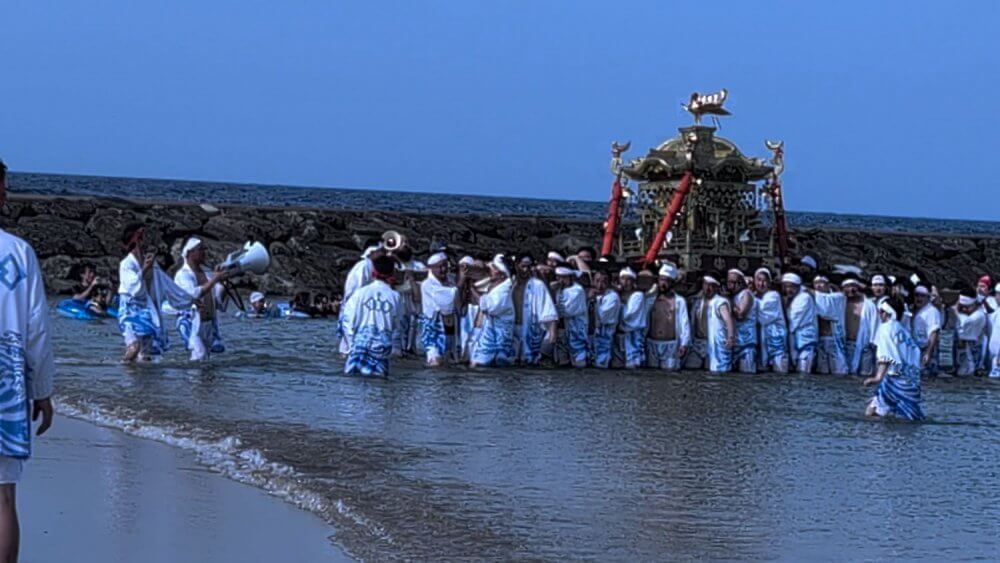
The long history of the festival can be observed in the omikoshi itself. Records indicate that it was crafted in 1864 for a cost of 15 kan and 474 momme of silver (approx. 58 kilograms), and has been carefully maintained ever since. The ornate piece was funded by local villagers and the wakamono-gumi, or youth group, a type of community organization present in towns and villages across Japan in the Edo and early Meiji periods. In Amino, the wakamono-gumi was responsible for arranging the Minazuki Festival procession until being dissolved post-war.
The Fisherman and the Turtle
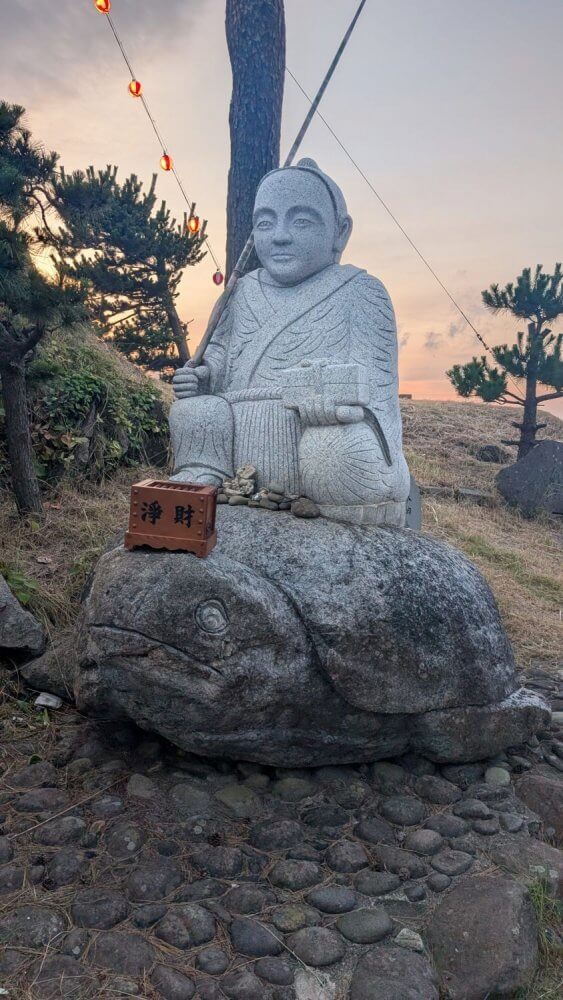
After the omikoshi is returned to shore, the second procession begins. Kyotango is known for being a likely location of the well known Japanese legend of Urashima Taro, who is enshrined at the nearby Shimako Jinja Shrine. In the story, a fisherman is carried by a turtle to the Dragon Palace beneath the sea, meets the princess under the sea Otohime, and returns to find that what he had believed to be a few days spent with her was at least 100 years.
Urashima Taro entering the ocean, carried on a giant turtle
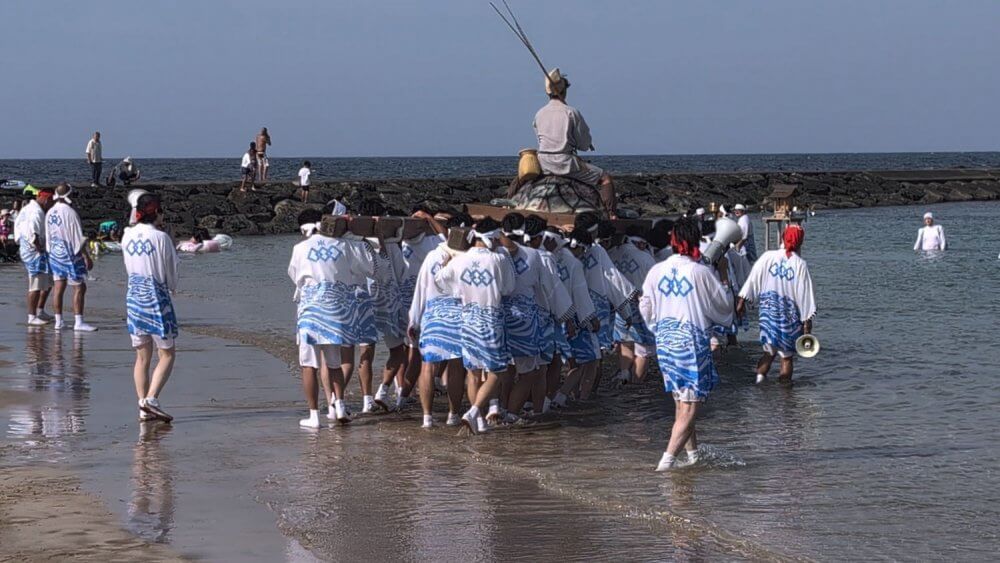
That legend is played out every year, with the procession carrying Urashima Taro (pictured above) on a giant turtle. The fisherman is carried into the sea, where Otohime comes to meet him in a boat. The princess joins him on the turtle, and the two of them are borne back to shore, where they give out treats to children attending the event.
Otohime meeting Urashima Taro Otohime and Urashima Taro Returning to Shore
-1000x750.jpg)
The two characters returning to shore bring the processions of the Asamogawa Minazuki Festival to a close, but the event is not over!
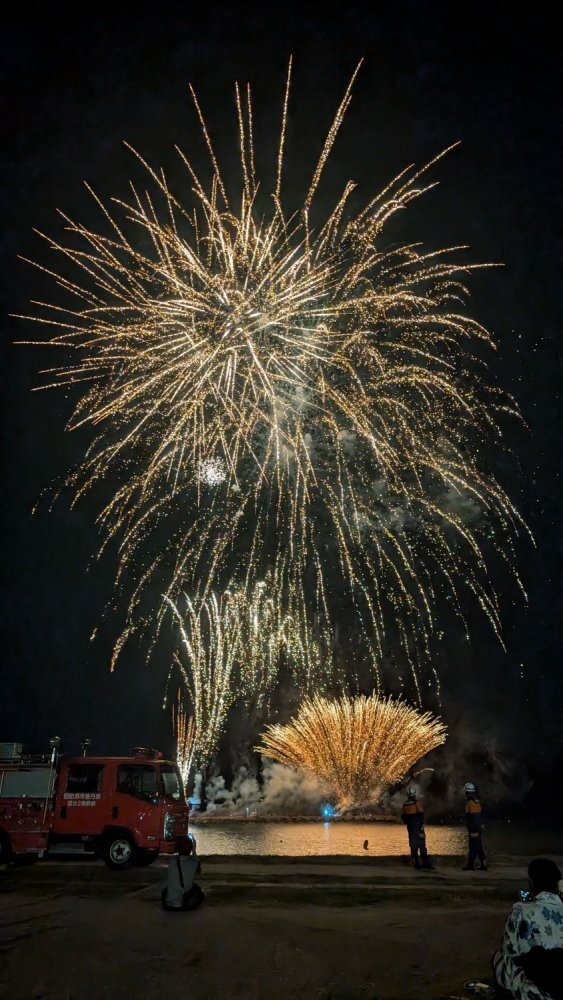
This article has focused on the processions, but the festivities also include a fireworks festival. This year 2,000 fireworks lit the park, and visitors could enjoy a wide range of stalls lining the street, offering festival food and games. We recommend the Hiroshima-style Okonomiyaki and candied strawberries!
Sources
Kyotango City History Materials: Folklore of Kyotango City, pp. 56, 57, 126.
History of Amino (Volume 1), pp. 432 – 434.
History of Amino (Volume 2), pp. 54 – 55.
History of Takeno (Volume 1), pp. 215.