
Blog
Posted: November 21
Tango’s Ancient History – The Three Great Burial Mounds
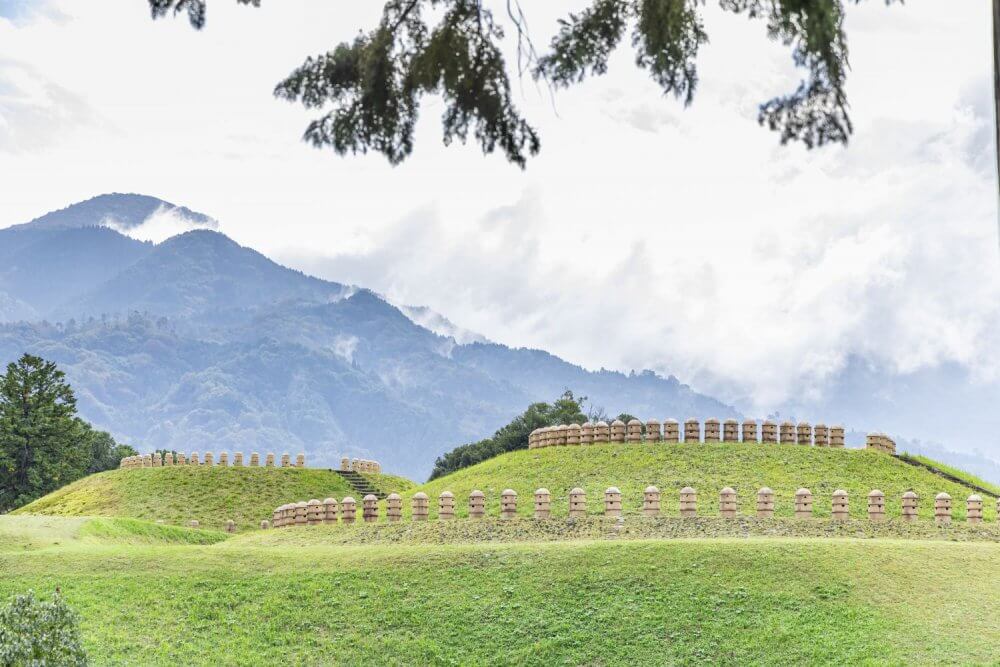
The Tango Kingdom
On what is now the Tango Peninsula, to the north of Kyoto City, it is thought that there was once a powerful “Tango Kingdom”. This kingdom, made wealthy by trade with Continental Asia, faded away before our written records begin. The mysterious kingdom is believed to have peaked during the Kofun period (c. 3rd Century – 7th Century AD), and in Tango, physical remnants of that time remain, which hint at an ancient and very different pre-Buddhism Japan.
Revealing the Wealth and Power of the Tango Kingdom
The Kofun period is named after the massive burial mounds built across the country prior to the spread of Buddhism. The Tango Peninsula is dotted with them, and our three most impressive are referred to as the Sea of Japan’s Three Great Burial Mounds, in Yosano, Tango-cho, and Amino (in order of size).
These burial mounds were massive feats of engineering for the time, requiring great manpower to build the mounds and burial chambers, haul many tons of rocks to cover the surface, and create thousands of Haniwa teracotta clay sculptures to place around the outside. They have all been listed as Designated Cultural Properties of Japan, and have been restored so that visitors can learn about the ancient history of Japan and take in panoramic views of the peninsula.
Ebisuyama Burial Mound
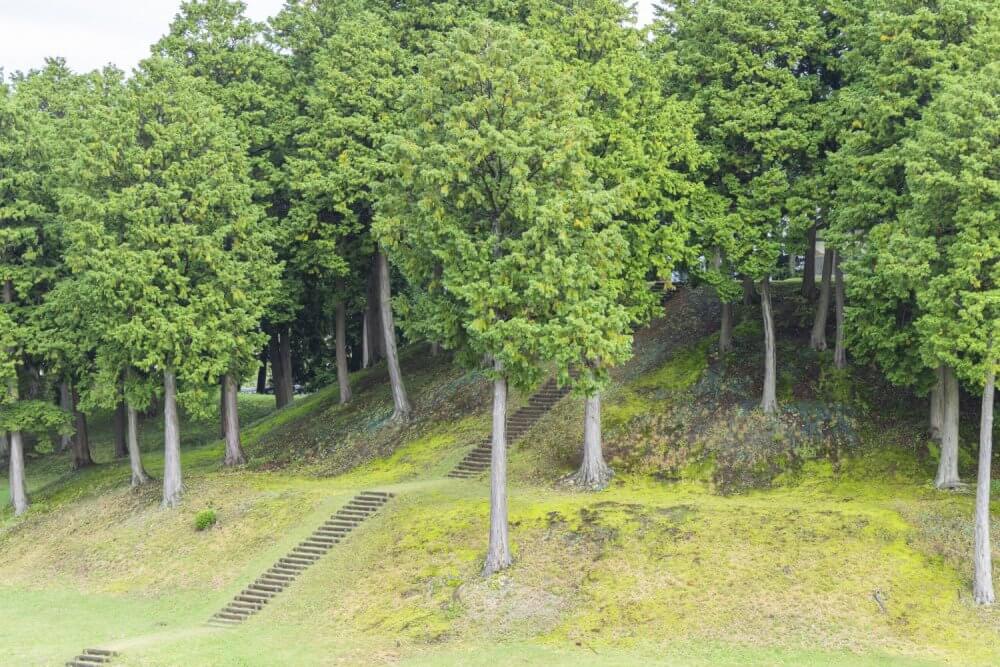
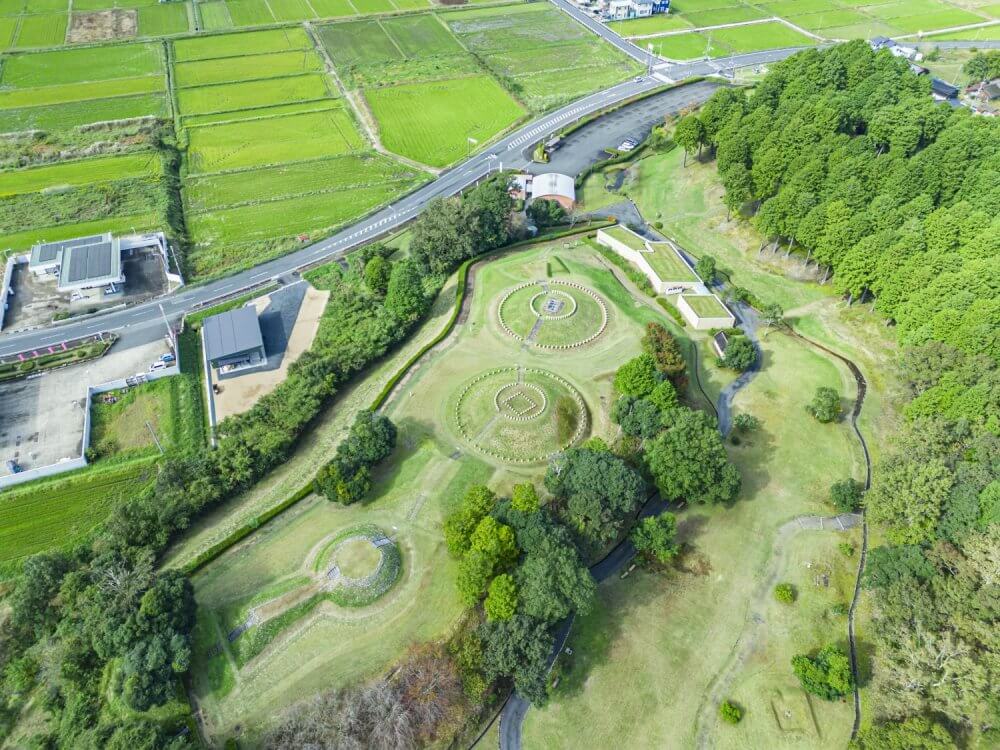
The Ebisuyama Burial Mound is a “keyhole shaped” burial mound with a length of 145 meters, and the smallest of the Three Great Burial Mounds. It is an example of a cluster of burial mounds, thought to have been built in the 4th century and surrounded by a collection of smaller burial mounds. Including the primary structure, a total of eight have been found.
Inside the Burial Mound
A keyhole shaped burial mound is made up of two sections, one with a circular end and one with a flat end, giving it the appearance of a keyhole when seen from above. The circular end is usually larger, and contains the burial chamber. In the circular end of the Ebisuyama mound, a boat-shaped sarcophagous was excavated, along with rare items including a chinese-style mirror, short blade, swords, iron arrowheads, and an axe.
Restoration
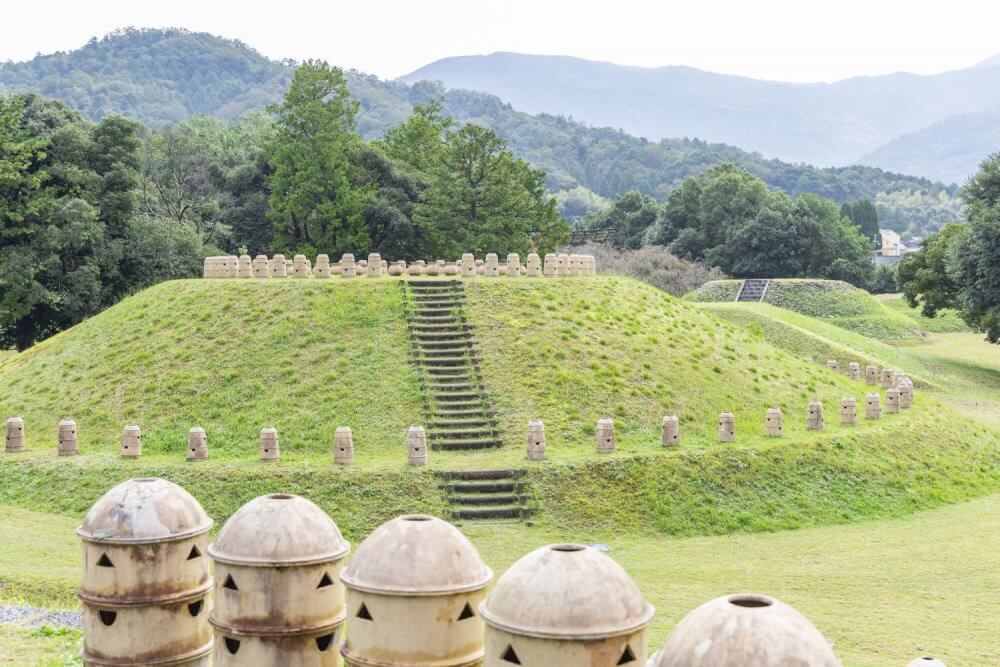
The Ebisuyama Burial Mound is open to the public as the Yosano Municipal Kofun Park, where it and the smaller mounds have been carefully restored to a form closer to how they may have looked 1,600 years ago. While exploring, the strangest sight may be the Haniwa clay figures placed around the outside terraces of the mounds.
Haniwa generally depict animals, people, or even tools and everyday objects, and are common to many burial mounds built during the Kofun period. For larger burial mounds, thousands were made and placed around the outside, both to mark the tomb and to protect the souls of those inside. The domed Haniwa shown above are a shape unique to the Tango Kingdom, and are thought to be only found at burial mounds of the ruling class. To learn more, a museum facility on-site is dedicated to sharing knowledge about Haniwa.
Getting There
From Yosano Station, ride the local bus about 18 minutes, and then walk the remaining distance (approx 30 minutes total).

Shinmeiyama Burial Mound
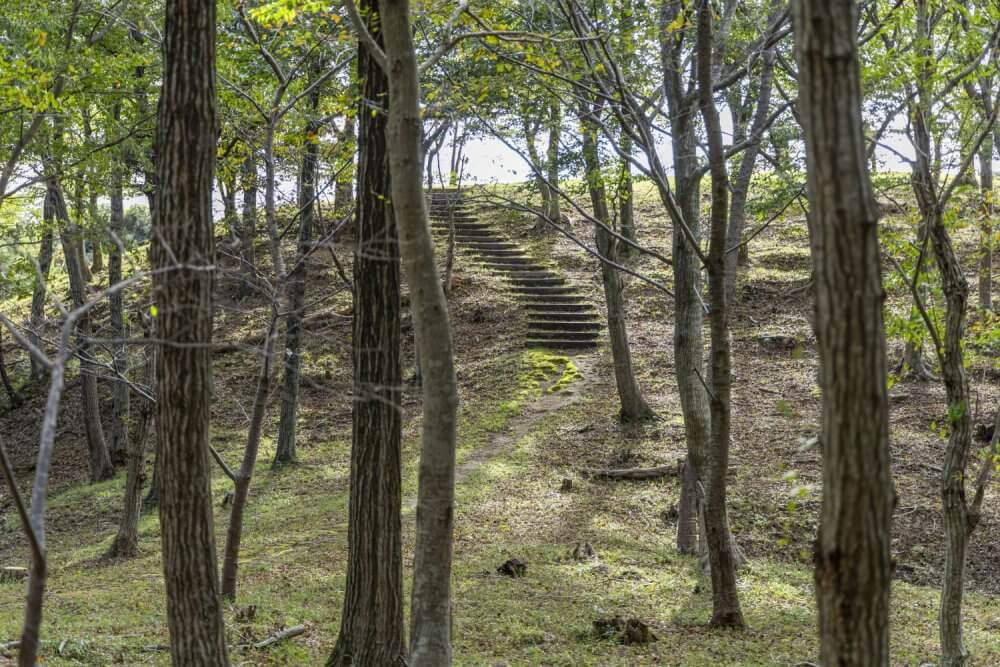
Located in Tango-Cho, in northern Kyotango, the Shinmeiyama Burial Mound is tucked into the woods near the historic Takano Shrine. The keyhole has a length of 190 meters, 45 meters longer than the Ebisuyama mound.
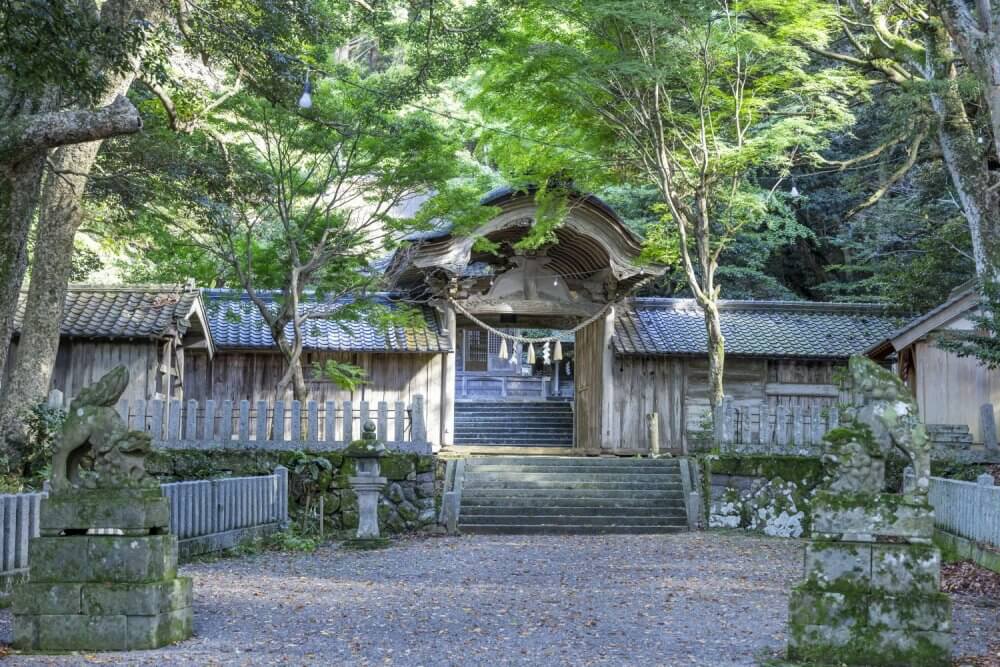
The trail starts from Takano Shrine
To the right of the entrance to Takano Shrine, pictured above, is a trail cutting through the woods towards Shinmeiyama. After following the trail for a short time, a small staircase leads upwards, wrapping around the side of the rectangular section before ending at the approach to the peak. The rectangle is now completely covered in trees, which thin on the way towards the top, becoming a wide clearing.
Views of the Past
When the burial mound was built, the surrounding scenery would have looked very different. At that time, it is believed that a lagoon reached all of the way to the foot of Shinmeiyama. The structure would have made an imposing show of power for the wealthy merchant rulers, standing right on shore, visible to all boats stopped at the busy port.
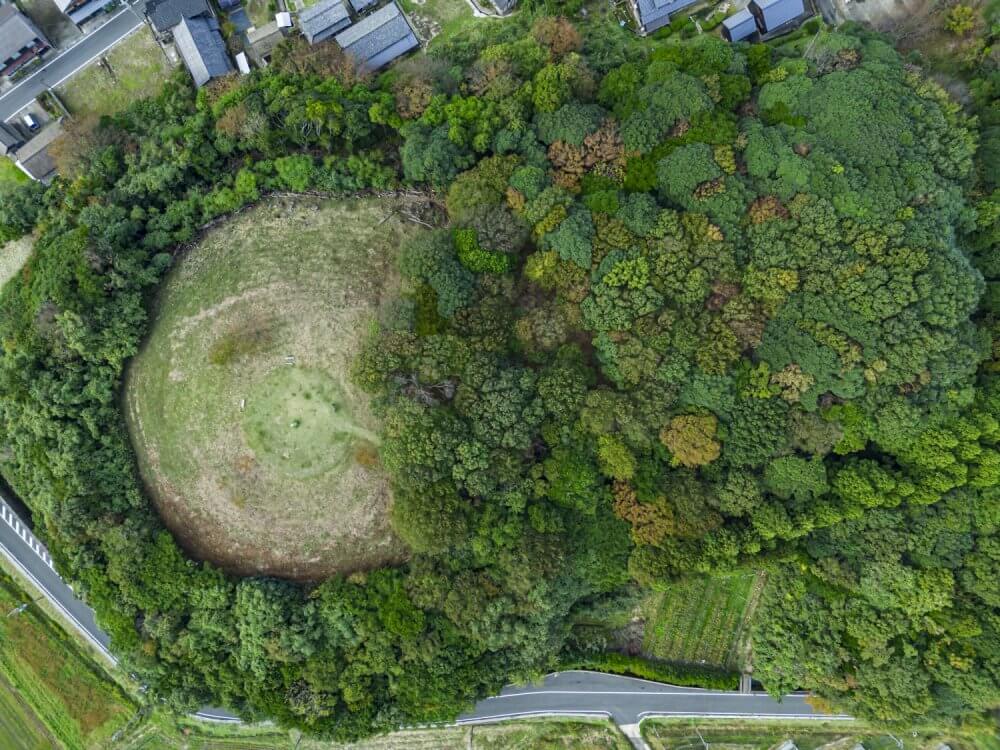
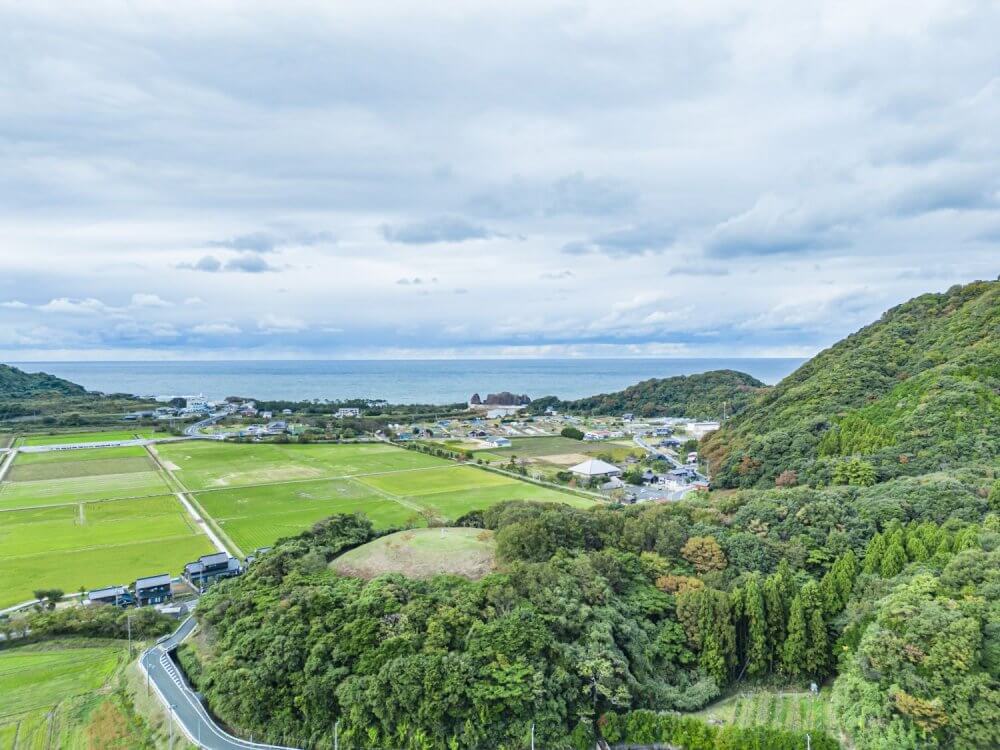
It is said that on the top there were once stone pieces strewen about, leading to the theory that there was once a Pit-style stone chamber, a stone room near the top of the mound, with a sarcophagous placed inside. The outside of the mound would have also been covered in a layer of roofing stones, giving a different impression than the clearing and trees we are left with today.
Views of Tango-cho
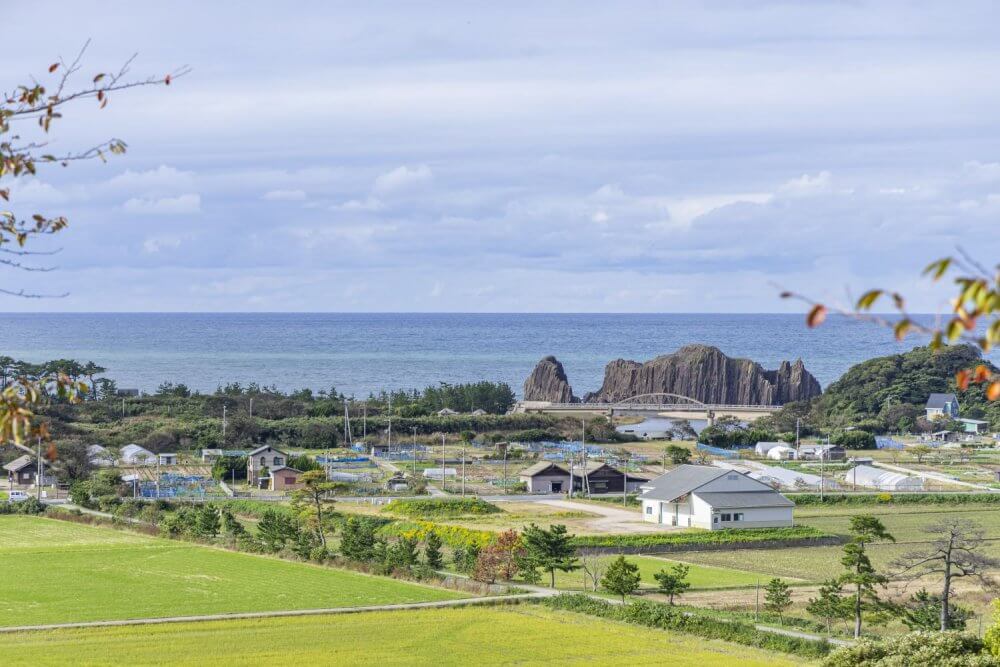
From the top of the burial mound, there is an amazing 270 degree view of Tango-cho. On one side you can see the mountains, and on the other side Tateiwa is framed by the sea. Even with the lagoon reaching closer, it’s likely that those who built the Shinmeiyama burial mound would have seen the impressive formation in a similar way, standing in the distance.
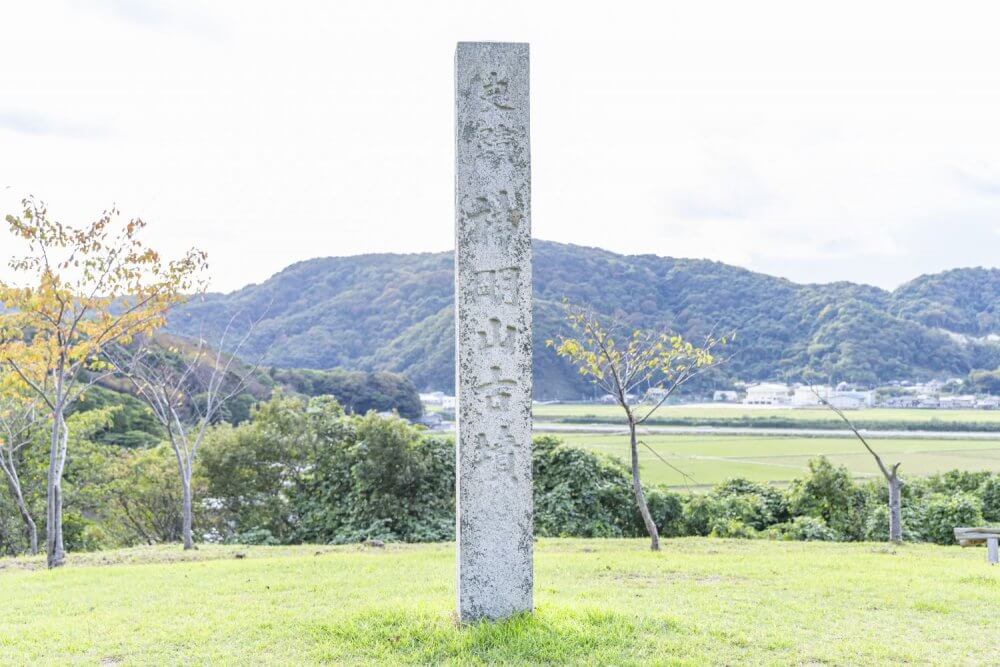
Relics excavated from Shinmeiyama are displayed in the nearby Tango Ancient Village Museum (more info below).
Getting There
20 minutes by car from Amino Station or Mineyama Station, 25 minutes on foot from Tateiwa.
Find more information about how to get to Shinmeiyama and what is nearby on our page:
Amino Choshiyama Burial Mound
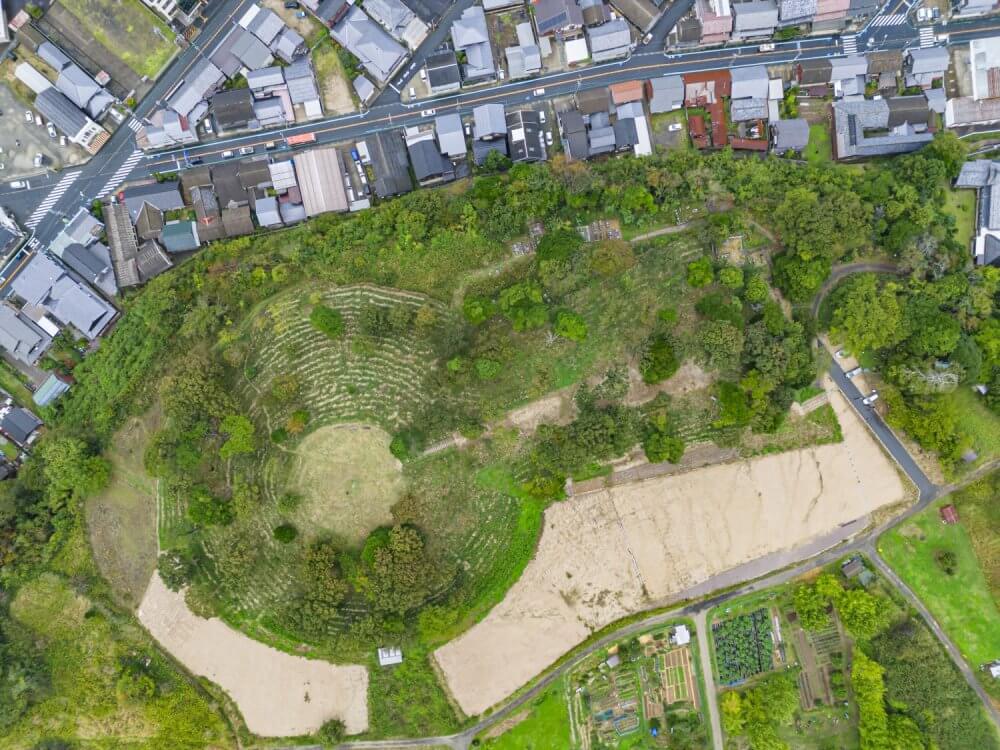
The Greatest of the Three Great Burial Mounds
The final and largest of the Three Great Burial Mounds is located in Amino, to the southwest of the Shinmeiyama Burial Mound. The Amino Choshiyama Burial Mound has a length of 201 meters, and is not only the largest burial mound in Tango but the largest keyhole shaped burial mound found along the sea of Japan.
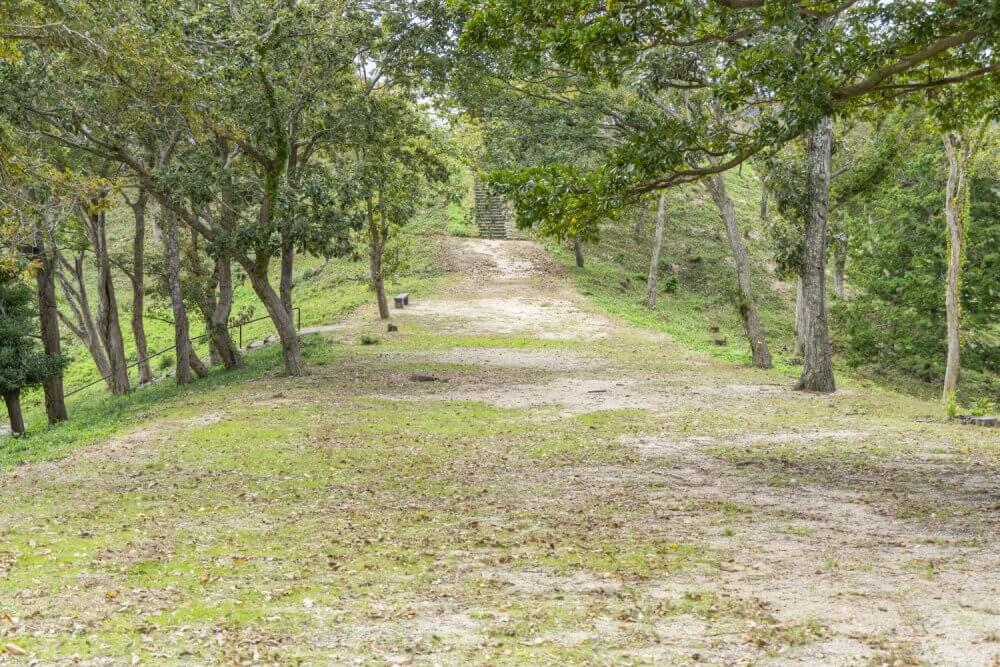
The Approach
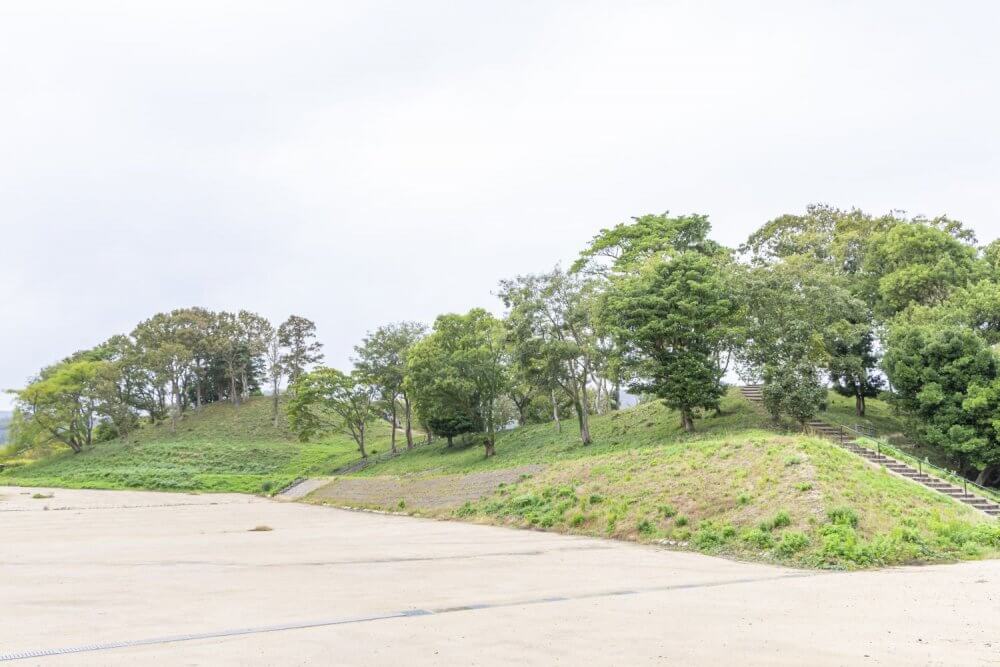
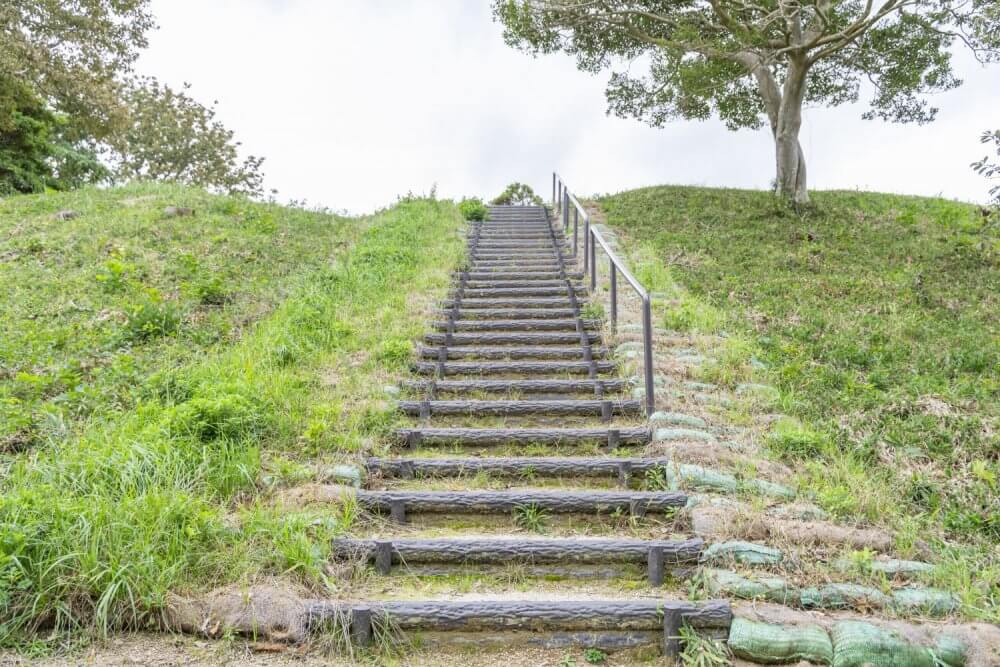
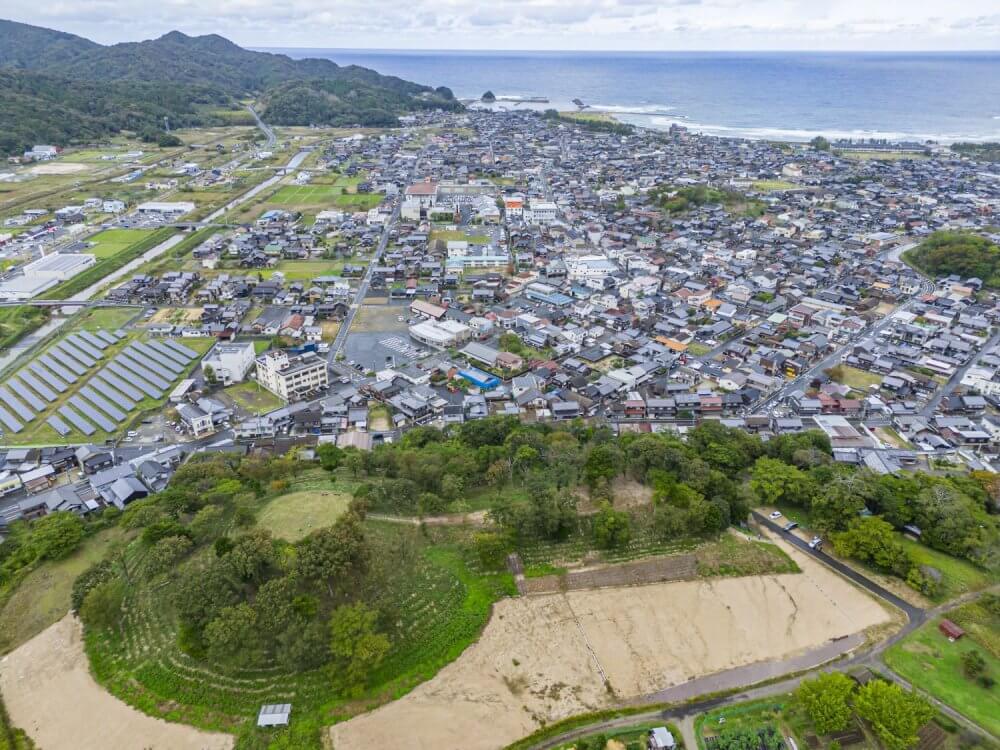
Of the three, Choshiyama is the most striking, standing out from the scenery. Its keyhole shape is visible from the ground, and reaching the top takes some effort, but you are rewarded with a complete view of the seaside town of Amino, from the mountains to Hatchohama Beach.
Restoration
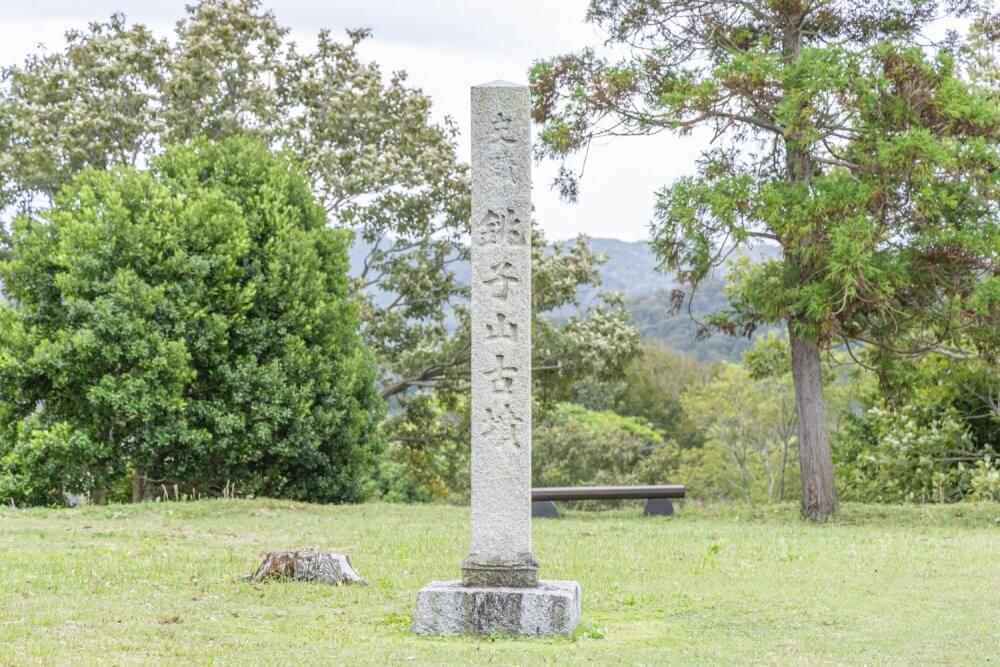
As of writing, the structure underwent restoration recently, with the work finishing in April of 2025. As well as servicing the burial mound itself, recreated Tango type Haniwa were placed along parts of it, and a new guidance facility was built nearby. Find the scannable QR code inside for multi-lingual info about Choshiyama’s history and the work that has been done on it over the centuries.
Picturing the Past
Similar to Shinmeiyama, the Choshiyama Burial Mound was once positioned at the edge of a lagoon, and surrounded by a moat between 17 and 25 meters wide. This would have isolated it from the surroundings, making it stand out to any boats carrying goods along the coast, just as it stands out even now to anyone passing through Amino.
Getting There
4 minutes by car or 20 minutes on foot from Amino Station.
Find more information about how to get to Choshiyama and what is nearby on our page:
Tango Ancient Village Museum
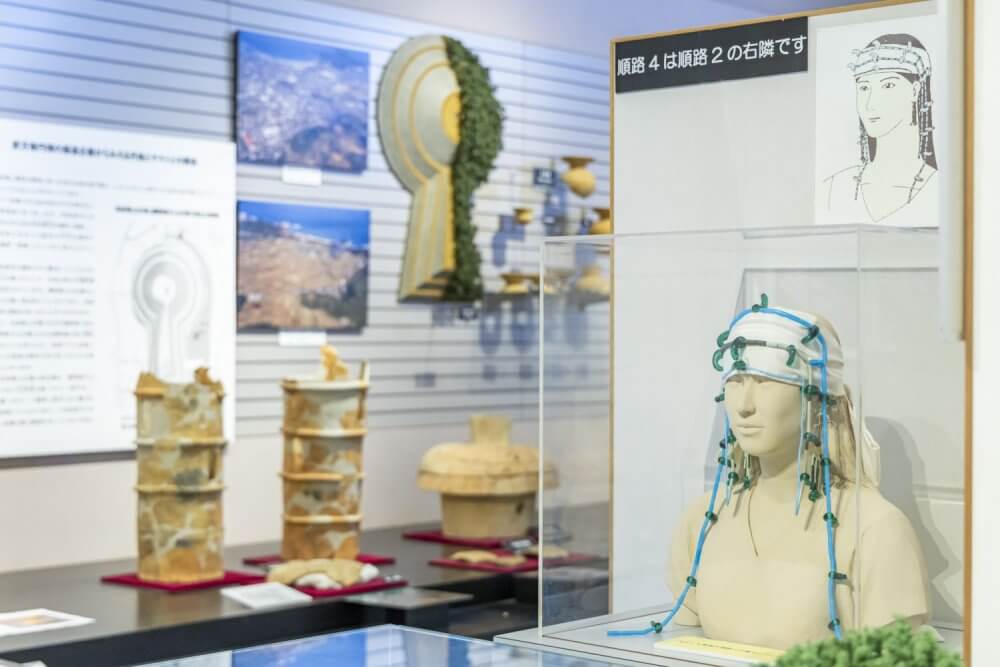
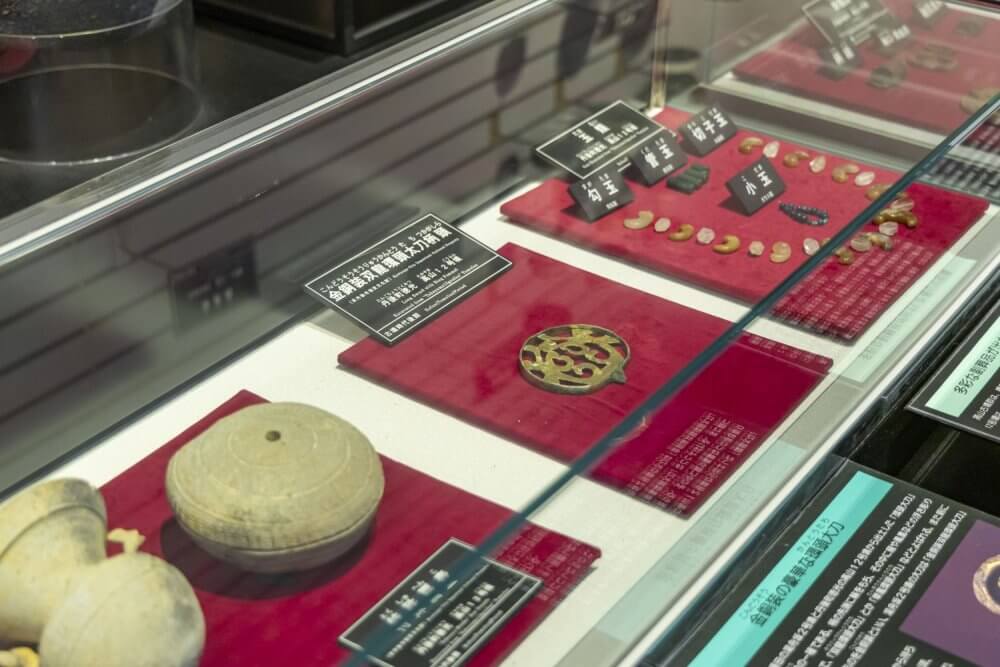
As the burial mounds themselves have relatively little signage on-site, we recommend also visiting the Tango Ancient Village Museum, located a short walk away from the Shinmeiyama Burial Mound. The museum displays tools, accessories, pottory and more, including items excavated from Tango’s burial mounds.
Learn more about the museum on our page:
Exploring Tango’s Burial Mounds
This map compiles the locations of burial mounds great and minor, as well as some other sites of ancient activity such as the Toochi Ironworks in Yasaka.


